Apps
Adaptive learning through gamification, Adult education through sequencing, Behavior change through gaming, Cognitive skill development games, Daily routine rebuilding games, Mindfulness practice activities, Self-improvement games for adults, Structured habits restoration, Time management educational games, Wellness through educational games
Agatha Christie
0 Comentários
Sequencing-based educational games for adults trying to restore structured daily habits
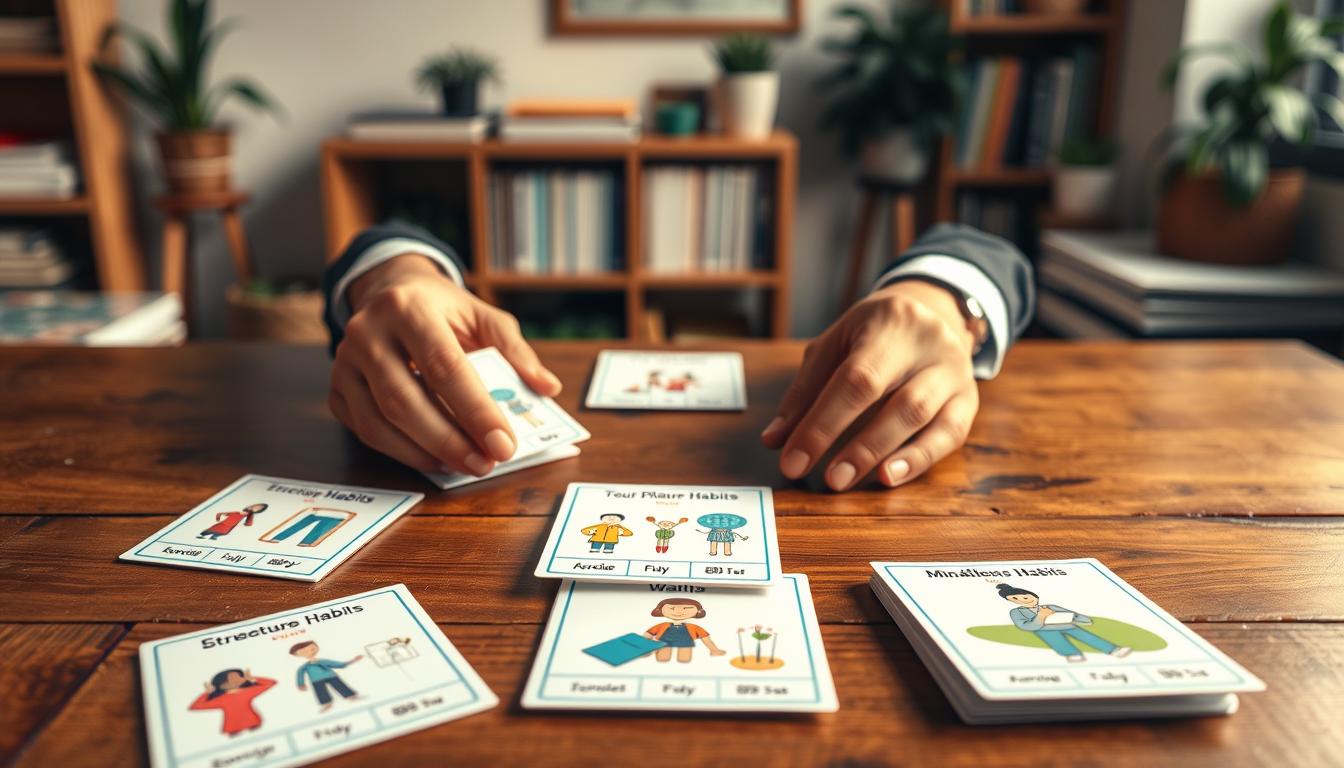
Practical play turns abstract steps into clear, repeatable tasks adults can try at home, work, or in the community.
This guide targets adults reestablishing structure, plus caregivers, therapists, job coaches, and instructors who want game-based supports that transfer to daily life. You’ll see how turn-taking, timers, and constraints create repeated practice without feeling remedial.
We’ll cover why sequencing boosts executive control, how to pick tools, a curated list of products and card decks, pricing and format tips, and simple implementation steps that encourage carryover from tabletop to real tasks.
Expect picks that focus on real steps—chronological tasks, math-friendly challenges, workplace icebreakers, and visual supports that lower cognitive load so learners self-correct and build independence.
Why sequencing-based learning helps adults rebuild routine habits
When daily tasks are arranged into a logical order, adults find it easier to plan, pace, and complete them. Practice that emphasizes clear steps turns abstract goals into concrete actions. That clarity supports better time use and steadier progress in everyday life.
Executive functioning and time management benefits
Sequencing organizes numbers, words, or events into a visible order. This structure strengthens executive functioning by aiding organization, prioritization, and time tracking.
Adults can chunk tasks, set realistic durations, and check off items. Those small wins reduce overwhelm and improve follow-through.
From patterns to communication: real-life impacts of sequencing
Recognizing patterns—like the staged construction of a building—helps estimate timelines and plan resources. Practicing ordered actions in activities and short timed rounds transfers directly to real tasks.
Sequenced supports also aid communication. Planning a briefing or a narrative with a clear beginning, middle, and end makes messages easier to follow.
Neuropsychology shows the left hemisphere plays a key role in sequencing (Haaland, 1994). That suggests repetitive, concrete practice using cards and simple sequence drills can meet diverse learner needs and lower cognitive load.

How we chose the best educational sequencing games for adults
Selection began with a simple question: will practice at the table transfer to real life? We kept tools that mirror everyday activities and show each step clearly. That lets learners try the same sequence at home, work, or in the community.

Focus on activities of daily living, steps, and real-world transfer
We prioritized materials that match common tasks: dressing, cooking, transit planning, and hygiene. Each item needed distinct, checkable steps so learners and instructors can verify performance quickly.
Engagement, accessibility, and evidence-informed design
Engagement was judged by constraints, timers, and layered challenge levels that keep practice brisk without causing stress. Accessibility features mattered: large print, high-contrast visuals, and flexible formats that work with one person or a small group.
- Language supports: built-in vocabulary and prompts to aid teaching and carryover.
- Durability and format: decks, spiral books, or printable sheets that survive repeated use.
- Skill balance: items that exercise sequence, logic, number sense, and narrative planning.
educational sequencing games for adults rebuilding routine habits
Here’s a short guide to the most useful sets, with clear use cases and cost notes. Each pick is grouped by skill target and setting so you can match a tool to time, budget, and learner needs.
Top picks at a glance
- Flagship ADL workbook: 76 six-step sequences covering mealtime, hygiene, household chores, safety, retail, transportation, entertainment, and school. Durable spiral format and clear visuals.
- Quick-grab picture cards: portable, high-contrast cards for daily routines and warm-ups. Ideal for visual students and quick stations.
- Story decks: image-driven packs that practice beginning–middle–end planning to boost narrative skills and communication.
- Math and logic decks: constrained rounds with timers to train ordering, attention, and flexible problem solving.
Specialty sets and use cases
Chronological order games practice placing life events and company milestones in order, which aids memory and context. Sentence and word sequencing activities turn words into meaningful sentences to strengthen language and executive control.
Social icebreakers and workplace-friendly tasks let teams collaborate on short sequence builds with no heavy prep. Trip flow-chart planners apply steps to route planning while tracking time and cost limits.
| Tool Type | Best Use | Price Tier | Durability / Portability |
|---|---|---|---|
| ADL Workbook | Daily living & transfer | $ (3.00 original price) | Spiral, high durability |
| Picture Cards | Quick stations, visuals | $ (original price 3.00) | Card deck, pocket-ready |
| Story Decks | Narrative & planning | $$ | Deck, moderate |
| Math/Logic Challenges | Ordering & attention | $$$ | Durable cards, timer included |
Based on user feedback, look for items with high ratings: sets with based reviews 5.0, based reviews 4.9, and those listed as based reviews 4.7 often balance price and durability. Choose a lower price deck for quick practice and a workbook when you need comprehensive, transferable practice.
Top pick: Functional Sequencing Activity Sheets for Daily Living Skills
The Functional Sequencing Activity Sheets is a compact, practical workbook that maps real tasks into short, teachable episodes.
This 167-page book contains 76 six-step sequences across eight ADL categories. Each spread pairs a six-step sequence with ten targeted vocabulary words and six conversation prompts to boost comprehension and communication.
What’s inside: structure and language supports
- 167 pages with 76 six-step sequences modeled on real-life tasks to walk learners through predictable steps.
- Each activity includes 10 vocabulary words and 6 conversation questions to strengthen communication and comprehension.
- Extension activities on follow-up pages let teachers adapt practice to home, work, or community contexts.
ADL categories covered
The workbook spans mealtime, household chores, entertainment, safety, school, hygiene, retail, and transportation. That range supports weekly planning and varied practice across day-to-day life.
Extras, price, and best uses
Included are a Parent/Helper Letter, a blank sequence template, and awards/certificates to encourage carryover and recognition.
Listed price: Now $69.50. Current stock: 1. Another listing notes a spiral-bound format and three reviews, with one listing tagged based reviews 4.9.
Ideal uses: individual remediation, small-group practice, and transition programs where consistent structure helps students regain daily life skills. Quick session setup: pick a category, teach the steps, review vocabulary, prompt discussion, then assign an extension activity.
| Feature | Details | Why it matters |
|---|---|---|
| Pages | 167 | Comprehensive coverage and multiple sessions |
| Sequences | 76 six-step sequences | Short, repeatable practice that models everyday steps |
| Language supports | 10 vocabulary words + 6 questions per activity | Improves comprehension and communication |
| Extras | Parent letter, blank template, certificates | Supports carryover and motivation |
| Price & stock | $69.50; stock 1; spiral-bound noted; 3 reviews | Durable format and clear market signals |
Picture-based sequencing cards for daily routines
Picture-based cards turn abstract checklists into touchable steps that learners can sort and practice. These packs make each action visible so adults can arrange, narrate, and check a simple sequence during short sessions.
Sequencing picture cards and cards sequencing events use-cases
Common session flow is quick: shuffle the images, lay out the cards, arrange them in order, then narrate each step while comparing to a reference. Instructors time attempts and note prompts needed.
Use cases include warm-ups, stations, or brief independent practice where repeated trials fit tight time windows. A small pack is ideal for quick stations; a larger set supports extended activities.
Visual supports for learners rebuilding steps and order of events
Design adjustments help match skill levels. Use fewer cards for simpler tasks and add distractors or look-alike pictures to increase challenge. Personalization works well: photograph a learner’s real task, print the images, and create a tailored set.
- Accessibility: high-contrast images, large-print labels, and clear step cues reduce cognitive load.
- Data collection: record correct order placement, time to complete, and number of prompts per session.
- Carryover tip: include brief conversation prompts after each sequence to link steps to safety, efficiency, and independence.
Story sequencing decks to rebuild narrative and planning skills
Story decks turn random images into short plots that teach planning, cause-effect, and clear expression. These packs are useful in school and workforce readiness settings where concise storytelling supports presentations and interviews.
Make up a story: use images to practice beginning, middle, and end
Protocol: shuffle a large bucket of image cards. Draw seven images, pick at least four, and arrange them into a tight story sequence.
This activity forces players to choose salient events and link them into a logical plot. Time the round or add look-alike pictures to increase executive control demands.
Boost comprehension and communication while sequencing
- Use image-based decks to build a clear beginning, middle, and end and strengthen planning skills.
- Encourage learners to narrate transitions between scenes to reinforce causal links and communication.
- Check meaning, not just order: ask “what comes next and why?” to test comprehension.
- Generalize by mapping story arcs to real events, like preparing for an appointment or organizing a small event.
- Differentiate by changing the number of pictures, adding distractors, or timing the arrangement. Note price and durability when choosing packs for repeated use.
Math-forward sequencing challenges to sharpen logic and order
Turn a standard deck into timed logic drills that sharpen number sense and ordering under pressure.
Deck sequencing: number sense with constraints and time limits
Shuffle a deck, give a formula, and ask students to pick a set number of cards. Example: choose five cards so the sum of the first two equals the sum of the other three. Add a short time limit to raise challenge and focus.
- Present deck-based constraints that force a valid sequence while integrating math and order.
- Use timers to build pacing, attention, and tolerance for time-bound tasks.
- Vary rules—alternating parity, target sums, or ascending differences—to keep activities novel.
- Encourage strategic self-talk: plan, test, and adjust quickly under time pressure.
- Track metrics: attempts to solution, elapsed time, and accuracy to document growth in logic and executive control.
- Offer solo or head-to-head formats to fit individual practice or competitive group sessions.
Price and materials are minimal: a standard deck, a timer, and a scoring sheet give high-return practice that maps directly to workplace and daily task sequencing.
Chronological order games to practice ordering life events
Provide ten life events on cards and let teams race to place them from earliest to latest. This 10-item sequence activity asks players to arrange a clear order that builds temporal reasoning and factual recall.
Use a mixed set of company milestones, historical dates, or personal moments. Even mistakes spark learning: errors prompt discussion and fact review that reinforce memory.
Practical uses include workplace onboarding, where new hires sort company milestones to gain context. In transition programs, biography timelines connect past choices to future planning.
- Narrow time spans or add distractor events to raise difficulty and test deeper context.
- Require date recall along with placement to add a memory component.
- Add short timed rounds to simulate mild pressure and to motivate repeated practice.
- Debrief after each round: ask players to explain why each event belongs where it does.
| Activity | Best Use | Key Benefit |
|---|---|---|
| 10-event chronology set | Class or group practice | Builds temporal reasoning and factual recall |
| Company milestones deck | Onboarding | Contextual memory and team talk |
| Biography timeline pack | Transition programs | Links personal history to goal planning |
Sentence and word sequencing for language and executive control
Simple, hands-on word tasks strengthen grammar, working memory, and planning. These activities make abstract rules visible and give students quick, measurable practice.
Sequence stacking
Write each word of a 12-word sentence on separate cups. Shuffle them and ask learners to reorder the cups into a meaningful sentence.
Set a one-minute limit to add mild pressure. Track completion time and number of prompts to document gains in syntax and memory.
Scrabble-style letter play
Use letter tiles to build words by sequencing letters into correct order. Up to four players can play at once, making this a social, competitive drill.
- Use visual-tactile pieces to make words concrete and boost transfer to writing and speech.
- Calibrate difficulty by sentence length, punctuation cues, or decoy words.
- Teach metacognitive moves: find anchor words (subject/verb) and expand outward.
- Log time, errors, and prompts to measure progress in language skills.
Classroom tip: These low-cost activities fit 2ndenglish language arts slots, support quick stations, and pair well with sequencing picture cards during warm-ups. Consider price and durability when choosing materials.
Social and workplace-friendly sequencing icebreakers
Try a color-order circle activity to warm up a group, boost memory, and practice following rules. Participants stand in a circle and note each person’s clothing color. Then the team writes names in VIBGYOR order (violet to red).
Sequence icebreaker: color-order and team interaction
This low-prep activity uses visible cues and clear steps. The most accurate sequence wins. It promotes quick rapport, name recall, and playful competition.
- Variations: silent ordering with hand signals, or sort by badge colors or department tags.
- Facilitation tips: set a short time limit, debrief strategies used, and rotate who records the list.
- Benefits: improves observation, social skills, and collaborative problem solving in minutes.
- Transfer: noticing patterns and following order rules supports on-the-job procedures and safety checks.
| Format | Setup time | Best use | Price |
|---|---|---|---|
| Circle color-order | 2–5 minutes | Icebreaker for new teams | Low |
| Silent hand-signal sort | 3–6 minutes | Nonverbal cohesion practice | Low |
| Badge/department tags | 5–8 minutes | Onboarding or cross-team sessions | Low |
Trip flow chart planning for multi-step, budget-based sequences
Plan a multi-stop trip as a practical flow chart that forces choices about cost, time, and order. Use a simple budget rule (example: $0.10 per kilometer) and a round-trip goal to make each decision measurable.
From steps to routes: sequencing tasks with cost and time constraints
Start by listing destinations on cards and estimating distance and transit time between each pair. Players then arrange the cards into a viable sequence that stays within budget and fits a time window.
- Frame route planning as a flow-chart sequence with explicit cost and time limits to simulate travel or chained errands.
- Teach learners to weigh constraints—distance, budget, and timing—and adjust the sequence to optimize efficiency.
- Use maps or schedules to add realism; require learners to justify route choices to build transparent planning.
- Introduce scenario cards (weather, delays, closures) so students must flexibly resequence when conditions change.
- Assess outcomes with metrics: total price, total time, and number of resequencing steps to reach a feasible plan.
Practice note: Run short timed rounds and compare metrics across attempts. This highlights progress in order-making and real-life task planning.
Related teaching tools that reinforce sequencing skills
Compact card packs and tiered decks give teachers fast ways to practice order, prediction, and story planning in short lessons or clinic sessions.
“Sequencing” 3-step picture sets
The Sequencing pack includes 19 sets of three-step picture sequences. Each small set fits into a pocket or station and supports quick prediction drills and oral narration.
Use these cards in 2ndenglish language arts slots to build confidence with short sequences. They work well as warm-ups, exit tickets, or quick paired practice that takes only a few minutes.
“Sequencing Events in Stories” Fun Deck
The Fun Deck contains 56 cards across three levels of difficulty. Level One uses three-sentence prompts aimed at grade specificalso included 2nd–3rd level skills, while higher levels add more complex sentences and distractors.
Teachers can scale challenge to match student readiness and document progress with brief comprehension checks after each ordering task.
- Compact resources target short 3-step picture sequences for prediction and storytelling.
- The Fun Deck scales difficulty to support incremental challenge and comprehension growth.
- Pair these packs with longer ADL sequences to scaffold from simple to complex practice.
- Ideal for classroom or clinic use where short rounds fit tight schedules or station rotations.
- Always add a quick comprehension question after ordering to validate cause-and-effect understanding.
Building daily structure: applying sequencing skills to ADLs
Mapping daily tasks into bite-sized steps helps learners start, finish, and reflect on each activity. Use clear, consistent prompts so the same actions become predictable parts of the day.
Hygiene, mealtime, chores, transportation: steps that restore predictability
Map core activities daily living—hygiene, mealtime, household chores, and transportation—into checkable steps. Put a short card or visual schedule at the point-of-performance: bathroom, kitchen, or entryway.
Practice the same sequence at consistent times to build expectancy. After mastery, introduce small variations to train flexibility and problem solving.
- Coach error recovery: pause, identify the missed step, resequence, and resume practice so learners regain control.
- Track progress with simple logs: time to complete, number of prompts, and accuracy of step order.
- Encourage generalization by practicing similar sequences across settings with minimal changes.
Tip: Use compact cards near task locations and a short checklist to help students monitor performance and stay organized during the day.
Price, value, and formats: choosing the right sequencing set
Choose a tool by thinking about durability, portability, and the long-term value it brings to instruction. Match format to setting and student needs before you buy.
Spiral-bound books, decks, and activity sheets: pros and cons
Spiral-bound books give durability, easy page turns, and space to write notes. The Functional Sequencing Activity Sheets is an example: 167 pages, 76 six-step items, listed at $69.50 with stock of 1 and a spiral format noted.
Decks and loose cards are portable and fast to set up. They work well in short stations or when instructors shuffle materials between groups.
Activity sheets and printable sets are low-cost and flexible. They lack the durability of books but let you tailor content to a subject or math focus quickly.
What “based reviews” and stock notes suggest about demand
Review counts and stock notes reveal demand and perceived value. Listings tagged based reviews 5.0 or based reviews 4.9 often indicate high satisfaction. Mentions of based reviews 4.7 or low stock (example: stock 1) can signal urgency.
Watch pricing cues: some sellers display price only at checkout due to manufacturer minimum advertised price rules. That means the shown cost may differ from the final price at purchase.
- When to invest in a comprehensive book: choose it if you need broad ADL coverage, built-in vocabulary, and extension activities that last across sessions.
- When to pick a deck: choose portability and quick setup for warm-ups, stations, or travel practice.
- Value checks: confirm included templates, helper letters, and certificates before buying; extras extend the set’s usefulness.
| Format | Best use | Key benefit |
|---|---|---|
| Spiral books | Classroom, clinic | Durability & write-on pages |
| Card decks | Stations, travel | Portability & fast setup |
| Printable sheets | Custom lessons | Low cost & flexible |
Implementation tips: from individual practice to group sessions
Start each session with a clear, short goal so learners know what success looks like. Use brief instructions and a visible timer to keep attention high and practice brisk.
Time-boxing, step checks, and conversation prompts
Use time-boxed rounds (2–5 minutes) to allow several quick attempts in one day. Short rounds build confidence and let you repeat the same sequence without fatigue.
- After ordering, have students verbalize each step and its purpose to spot gaps.
- Use simple prompts—who, what, when, why—to link ordered actions to safety and real-life relevance.
- Rotate modalities: picture cards, word stacks, and math constraints to broaden skills transfer.
- Track accuracy, prompts needed, and elapsed time to guide adjustments in difficulty.
- Assign one home or workplace task that mirrors the in-session sequence and add a 1–2 minute reflection.
| Tip | Quick benefit | How to measure |
|---|---|---|
| 2–5 min rounds | More reps per session | Rounds completed |
| Step verbalization | Clear understanding | Prompts needed |
| Modality rotation | Flexible transfer | Task accuracy across formats |
Conclusion
Using clear steps and repeatable practice helps people move skills from the table into daily life. Short, checkable sequences make tasks predictable and easier to complete during the day.
Choose tools that match your goals: ADL books, picture cards, narrative decks, or math constraints. Start small and track progress so students see measurable gains.
Build practice with timed rounds, step checks, and quick reflection. That mix trains order, decision-making, and independence in real settings.
Begin with one category—hygiene or mealtime—log results, then expand to community and workplace sequences as confidence grows. Match budget and format to your setting and use the tips above to create steady, lasting change.
FAQ
What types of sequencing materials help adults rebuild daily structure?
Look for visual decks, picture cards, story-card sets, and activity sheets that model step-by-step tasks. Materials that cover activities of daily living (mealtime, hygiene, chores, transportation) and include conversation prompts work well. Also consider math-forward decks and chronological-order exercises to strengthen planning and time management.
How do these resources support executive functioning and time management?
Step-based tasks break complex routines into manageable chunks, which improves task initiation and working memory. Time-boxed practice and sequencing constraints teach prioritization and pacing. Using checklists and visual supports during sessions helps transfer skills to real-life schedules.
Can picture-based cards be used for adults with varied literacy levels?
Yes. Picture cards provide nonverbal cues that reduce language demands and support comprehension. Pairing images with simple vocabulary and sequence labels builds communication and gradually increases independence in following routines.
What should I look for when choosing a sequencing deck or book?
Prioritize relevance to real-life tasks, clear step counts (3‑ to 6‑step sequences), built-in extension activities, and multiple formats (printable sheets, spiral-bound books, card decks). Check reviews and sample pages to confirm accessibility and adult-appropriate imagery.
How do story sequencing decks improve narrative and planning skills?
They guide learners to order events into beginning, middle, and end, which strengthens temporal reasoning and causal thinking. Practicing story order also boosts vocabulary, comprehension, and the ability to plan multi-step actions outside of fiction.
Are there options tailored to group or workplace sessions?
Yes. Team-friendly icebreakers and color-order or collaborative sequencing tasks encourage communication and role sharing. Choose decks with flexible timing and built-in discussion prompts for group dynamics and workplace skill-building.
How can math-forward sequencing help practical decision-making?
Number-based challenges teach constraint handling, order of operations, and prioritization. Incorporating costs, time limits, or route planning (trip flow charts) connects math sequencing to budgeting and scheduling decisions.
What price points and formats are common, and how do they affect choice?
Formats range from affordable printable packs and card decks to spiral-bound books with dozens of pages. Lower-priced sets suit practice and trial; larger books or comprehensive decks offer greater variety and extension activities. Use review scores and available pages to assess value.
How do I implement these tools for lasting carryover into daily life?
Start with short, repeated sessions focused on one ADL. Use time-boxing, step checks, and conversation prompts. Gradually reduce prompts and encourage self-monitoring with checklists. Practice in the real setting (kitchen, transit, workplace) for stronger generalization.
Do sequencing resources measure progress or include assessment features?
Many comprehensive sets include progress trackers, pre/post tasks, and tiered difficulty. If a set lacks formal assessment, create simple measures: timed completions, accuracy counts, and independence ratings to monitor gains over weeks.
Are there choices specifically designed for adult learners returning to school or work?
Yes. Look for sets that include workplace routines, classroom-ready tasks, and communication-building prompts. Materials that integrate vocabulary, sentence sequencing, and workplace scenarios support both academic and vocational transitions.
How portable and durable are card decks compared to books and sheets?
Card decks are typically more portable and robust for group use; laminated cards stand up to repeated handling. Books and spiral-bound sheets offer more depth and written extensions but are less convenient for travel or quick sessions.
Can these tools be adapted for individual needs and varying skill levels?
Yes. Select sequences with adjustable step counts, or break longer tasks into smaller sets. Use simplified images or add text prompts for learners who need more support. Progressively increase complexity as skills improve.
What role do conversation prompts and built-in vocabulary play?
They scaffold comprehension and social communication. Prompts encourage reflection about steps, cause-and-effect, and safety. Vocabulary supports accurate description of actions and improves expressive language tied to routines.
Where can I find products with strong user reviews and evidence-informed design?
Check established educational resource retailers, special education publishers, and clinician-reviewed marketplaces. Look for high overall ratings, sample pages, and descriptions that reference ADL focus, evidence-informed features, and accessibility options.