Retention-focused educational games for multilingual adult learners aiming to reduce cognitive overload

Can a few minutes of playful practice beat a long, boring study session when you need words to come out right in real talk?
Short, focused play can reshape how people store and retrieve vocabulary and grammar. That happens because positive emotion and quick feedback strengthen neural links and ease recall under pressure.
Here, retention means reliably pulling up words and structures at the right moment in conversation, across different language systems. The piece maps activities to proficiency, goals, and group size so students pick what fits their needs.
Expect a practical list: kinesthetic charades, multilingual bingo, spaced-repetition matching, and spaceman-style word builds. Each entry shows setup, timing, and tools to cut cognitive load and boost automaticity in short sessions.
Why play-based learning boosts retention and reduces cognitive overload for adult multilingual learners
Playful practice turns short sessions into strong, usable memory by linking words with emotion and action.
Chunking activities into short turns lowers extraneous load. Clear success criteria free mental space so students can focus on target language patterns and meaning.
Enjoyment matters. Positive emotion strengthens neural pathways, so motivated players consolidate vocabulary and structures more deeply. That leads to better long-term recall and fluency.

“Active tasks with quick feedback beat long passive study when the goal is retrieval under pressure.”
Embodied moves and visual supports build multimodal memory traces. Gestures, sketches, and tight time limits force rapid access and train automaticity, cutting the need to translate.
- Target-language constraints keep students producing directly from concepts.
- Alternating listening, speaking, and viewing spreads attention across modalities.
- Well-designed play gives everyone turns, builds confidence, and compresses high-quality practice into short sessions.
In short, this approach develops comprehension, speaking, and thinking skills efficiently. Active recall, spaced exposure, and varied input modes make it a practical way to boost memory and long-term language development.
Curated educational retention games for adults learning multiple languages
Short rounds of playful practice push words out of translation and into instant use.

Charades with target-language only guesses
Have players act out prompts while others must guess using the target language. Start with concrete nouns, then add idioms and cultural phrases.
Movement links to memory and speeds retrieval. Keep turns under 60 seconds and rotate roles to boost practice.
Matching and flashcards with spaced repetition
Pair images, phrases, or short contexts with cards. Use learner-made cards to personalize tricky vocabulary.
Schedule quick review intervals and rise difficulty from picture pairs to idioms in context.
Artistic Pictionary challenges
Ban verbal clues to force visual thinking and target-language output. Run themed rounds (verbs, travel) and debrief forms and usage.
Multilingual bingo variations
Call items in one tongue and mark cards in another to train attention switching. Add speed rounds and cultural sets for realism.
Spaceman-style word building
Use root, prefix, and suffix rounds to teach spelling patterns and word families. Award bonus points for correct affixes.
| Activity | Setup | Target skill | Group size |
|---|---|---|---|
| Charades | Prompt slips, timer | memory, vocabulary retrieval | 4–8 players |
| Matching/Flashcards | Cards, SRS app | vocabulary, context | Pairs or small groups |
| Pictionary | Whiteboard, themes | visual thinking, production | 3–6 players |
| Bingo / Spaceman | Cards, caller, word lists | attention, spelling | 6–20 players |
Rotate roles and finish with a two-minute log. Students jot new patterns and note persistent errors to shape next practice.
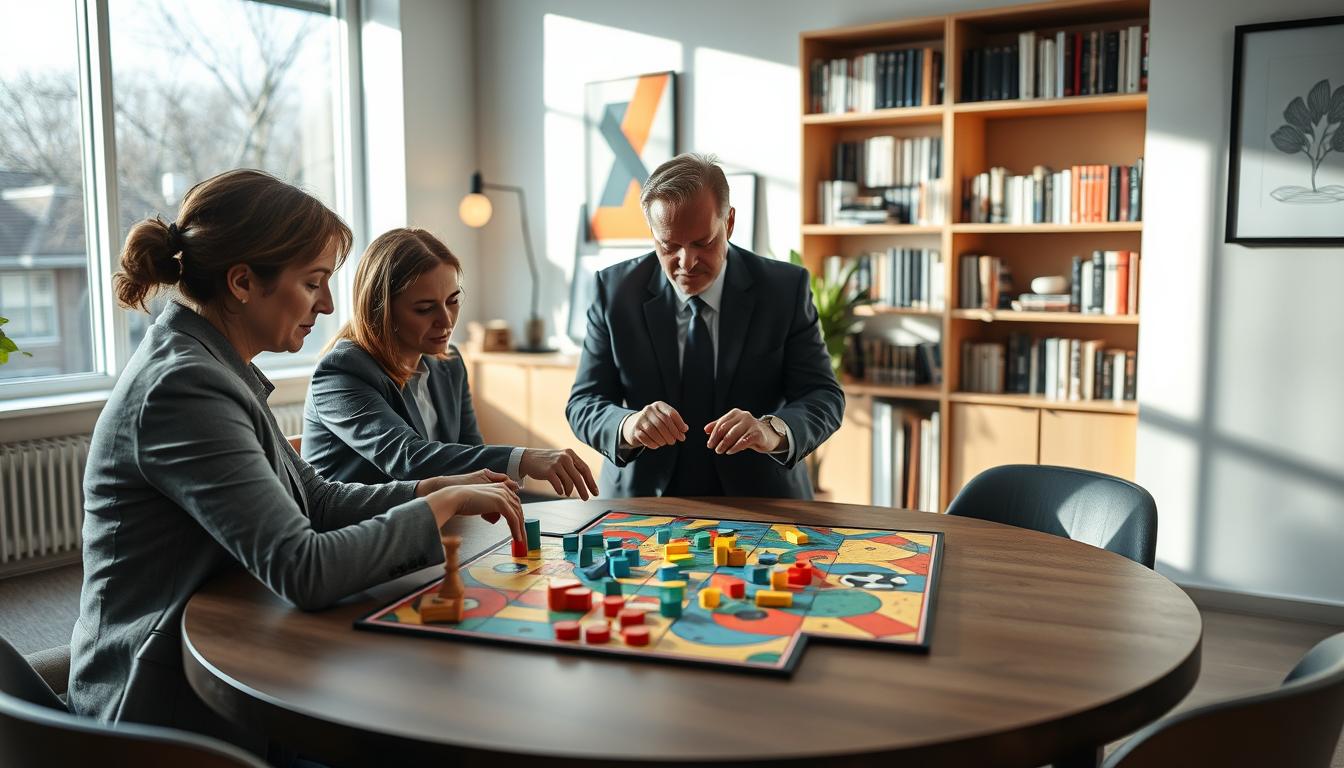
Board and tabletop favorites that supercharge vocabulary, spelling, and fluency
Tabletop favorites give structured prompts that speed up word recall and deepen meaning.
Scrabble is more than spelling practice. Require a short definition or a sentence each time someone lays a word. Align tile play to topic lists like healthcare or finance to steer vocabulary toward real goals.
Bananagrams trains speed and automatic word-building. Run short, timed grids and change tile counts to match levels. Add bonus points for word families and pause briefly to explain tricky items.
Codenames strengthens association and inference. Use semantic fields and debrief clues that link to several targets. Rotate the spymaster role so everyone practices clue-giving and interpretation.
“Freeze and explain” checkpoints help players justify usage and boost spoken accuracy.
| Activity | Primary focus | Setup | Group size |
|---|---|---|---|
| Scrabble (adapted) | spelling, vocabulary | topic lists, definition rule | 2–4 players |
| Bananagrams | automaticity, word-building | timed rounds, variable tiles | 2–6 players |
| Codenames | association, inference | semantic sets, role rotation | 4–8 players |
Use mini-cards of target terms to prime play and track recurring errors for short micro-drills between rounds. Add quick pronunciation checkpoints to protect spoken accuracy without slowing the flow.
Collaborative activities that drive speaking, listening, and comprehension
Structured group work nudges students to speak more and think on their feet in realistic settings.
Role-play and short round-robin segments build fluency by putting learners into real roles. Use scenarios like ordering, interviews, or negotiations with grammar targets and surprise twists to force on-the-spot adjustments.
Role-play and timed turns
Assign roles such as moderator, provocateur, or observer. Keep turns brief and rotate so every student speaks. Add a twist card each round to test adaptation and quick questions.
Jigsaw tasks and scavenger hunts
Split topics into expert groups, then form home teams where experts teach peers. This method strengthens comprehension and the ability to tell a coherent story about complex themes.
Design scavenger hunts around food, travel, or work. Require target-language submissions — photos or short phrases via QR codes — to confirm tasks and connect words to experience.
- Scaffold by level: starters for beginners, prompts for advanced players.
- Close with a two-minute debrief to capture new words and successful strategies.
Tech-enhanced language learning: apps, media, and pronunciation tools
Using targeted apps and media can speed up comprehension and pronunciation gains. Start with a clear, staged approach that pairs audio and subtitles to match ability and avoid overload.
Subtitle progression to boost listening comprehension
Begin with native-language subtitles plus target audio. Move to target-language subtitles with the same audio. Finish with no subtitles and faster, natural speech.
Choose media with clear enunciation at first, then add diverse accents to build robust listening skills.
Automated pronunciation and model imitation
Use “repeat after me” drills in apps that give instant feedback. Automated tools highlight stress, rhythm, and troublesome phonemes.
Short daily drills fit busy schedules and support steady skill development without cognitive overload.
Journaling and reflective tools to consolidate memory
Keep a quick journal or voice-note app tied to current topics. Capture key words, short reflections, and clips to review later.
- Rewatch clips after journaling to link listening, speaking, and writing.
- Track error patterns with tools to plan micro-practice sessions.
- Share selected entries with peers for feedback and accountability.
“Small, regular tech practices connect audio models with active output and long-term memory.”
Choosing the right game by proficiency level, goals, and group dynamics
Match each session to learners’ skill levels and goals so practice stays focused and manageable.
Beginners need high support. Use image-based matching, simple multilingual bingo, cooperative Bananagrams with fewer tiles, and guided role-play with sentence frames. These options lower cognitive load and build core vocabulary and basic phrase knowledge.
Intermediate players benefit from more challenge. Try Pictionary themed by verbs, timed Bananagrams, structured Codenames rounds, and jigsaw tasks with short texts. Example: a restaurant role-play with a surprise dietary restriction prompts quick problem-solving and new words.
Advanced pathways push fluency and depth. Run target-language-only charades, domain-specific Scrabble lists, complex Codenames associations, and open discussions. These tasks develop nuanced word choice and stronger oral skills.
- Keep groups small and rotate roles so students all speak and observe.
- Allocate time: 10–15 minutes to set up and model, 15–25 minutes of active play, plus a short debrief.
- For mixed levels, layer tasks (advanced give clues; beginners confirm definitions) so others contribute meaningfully.
Pick modes (competitive vs cooperative) and group size to match goals and keep motivation high.
Designing game sessions that lower cognitive load and maximize retention
Set up brisk activities that train automatic word retrieval in small time blocks.
Structure sessions so each minute of play targets a clear outcome. Short, timed rounds limit overload and boost focused learning.
Spacing, short turns, and attention resets
Use brief turns and predictable order to keep students active and reduce downtime. Short turns cut the chance of mental fatigue and keep attention steady.
Alternate tasks—listening then speaking—to reset focus. Add a quick two-count stretch or a one-item warm-up between rounds.
Clear objectives, feedback loops, and post-game review
Define simple goals before each round (e.g., ten target words; two suffix patterns). Clear goals make success visible and guide the whole process.
“Verify answers fast, model correct pronunciation, and record exemplar sentences for later review.”
- Structure sessions with brief, timed rounds to maximize high-quality practice per unit of time.
- Integrate spaced repetition by revisiting the same words or patterns across sessions to deepen memory.
- Use simple tools—mini-cards or checklists—to track words, error patterns, and wins.
- Conclude with a two-minute review: list new words, a tough pattern, and one strategy that improved skills.
Calibrate difficulty on the fly. If errors rise, add scaffolds. If accuracy is high, tighten constraints to keep the challenge just right.
Conclusion
Playful, focused sessions turn short practice into steady gains in spoken fluency and confidence.
This approach pairs structure, emotion, and quick feedback to strengthen memory and practical language use. Board play, timed rounds, and simple tech tools speed comprehension, pronunciation, and vocabulary in real talk. Small groups with friends or others keep sessions social and motivating.
Rotate topics tied to work, travel, or study so words map to real experiences. Use apps, cards, and brief journals to extend progress between meetings. Pick options that fit beginners to advanced learners and tune each session by what worked best.
Try one board game and one short activity this week. Set a 25-minute session, note three takeaways or a short story, and schedule the next meeting to keep steady development and build fluency the practical way.