Mental rotation games for adults aiming to improve spatial visualization
Can a simple set of steps help you see, move, and solve space with more speed and confidence?
This guide explains why spatial visualization matters in daily life and work. It links basic brain science to hands-on training that builds durable skills.
You’ll get a compact plan: test your baseline, pick targeted activities and tools, add movement drills, and track progress with simple logs.
Expect clearer visualization, faster decisions on layout or diagrams, and better transfer of gains to tasks that demand navigation and design.
Accessible options include puzzles, strategy play, CAD and VR exercises that scale difficulty and time constraints while keeping practice varied and motivating.
Whether you feel stuck now or want steady improvement, this how-to resource offers steps, checkpoints, and evidence-based information to guide steady training of the mind.
Why mental rotation matters for adults with weak spatial imagination
Better object manipulation in the mind leads to clearer plans and fewer surprises during execution. The ability to turn a shape mentally underpins how we plan steps, foresee outcomes, and solve multi-step problems that need flexible reasoning.
Those core skills touch everyday tasks: reading schematics, following assembly diagrams, or adjusting routes after a detour. Strong spatial skills and awareness in space directly improve task performance and confidence.
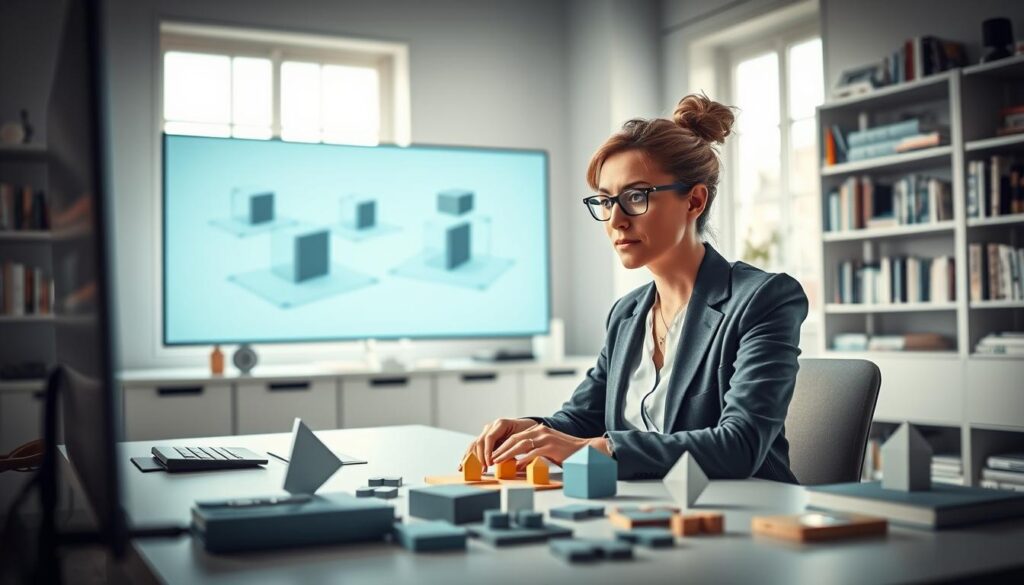
Systematic practice helps recognize shapes from new viewpoints, speed visual decisions, and hold spatial information in memory longer. Over time, this reduces simple errors and sharpens diagnostic reasoning when parts of a system must be compared.
- Professionally, better mental rotation supports model-based thinking and quicker mental simulations before action.
- Motivation grows as small gains become visible; continued practice compounds improvements in speed and accuracy.
“Breaking complex scenes into smaller mental steps makes gains feel achievable and lasting.”
Besides direct task benefits, training these processes strengthens attentional control and working memory. That broader payoff helps juggle steps and track changes in dynamic environments.
Understanding mental rotation and spatial visualization
Researchers have mapped how people turn shapes in their mind and how that process unfolds over time. This section summarizes classic findings and the core skills involved so you can target practice that yields real improvement.
What mental rotation is: from Shepard & Metzler to Vandenberg & Kuse
Define mental rotation as the process of turning images or objects mentally to judge sameness or orientation. Shepard and Metzler (1971) showed decision time rises with angular difference, suggesting an analog internal turn.
The Vandenberg & Kuse test (1978) standardized this idea into a 20-item MRT. Test takers choose matching models among rotated alternatives, a format still used in research and assessment.

Core spatial skills involved
Successful performance depends on perception, memory, and quick mapping of relationships. You must see patterns, hold parts in working memory, and compare orientations under time pressure.
These abilities improve with varied practice across images, models, and shapes, which promotes generalization in learning and development.
The brain at work: occipital and parietal contributions
Research identifies stepwise mental operations: perceptual preprocessing, discrimination, orientation identification, parity judgment, and response execution. The occipital lobe handles visual information early on.
The parietal cortex integrates spatial relationships and coordinates transformations. Knowing these mechanisms helps you pick drills that train speed, accuracy, or complex figure handling.
Benefits you can expect: problem-solving, memory, navigation, and creativity
Sharpening how you picture objects and routes improves quick decision-making on the job and at home.
Real-world payoffs at work and home
Strengthening skills helps you model alternatives, foresee constraints, and pick efficient paths to solutions. This speeds structured problem-solving and cuts small errors in measurements or layouts.
Visual memory improves when you attach facts to vivid scenes or routes. Recall becomes more reliable under time pressure, aiding exams, meetings, and on-site tasks.
Reasoning gets a boost from spotting patterns and structural similarities. That lets you transfer solutions across contexts and reduce trial-and-error.
Building cognitive reserve and resilience through practice
Consistent practice works like cross-training for the brain. It supports development of cognitive skills that help the mind adapt and resist decline over time.
Creative thinking also benefits: better visualization lets you prototype designs mentally and explore novel combinations before committing resources.
| Benefit | How it helps | Typical task |
|---|---|---|
| Problem solving | Faster modeling of options and constraints | Layout planning, assembly |
| Memory | Anchoring facts to visual scenes | Recall routes, technical steps |
| Creativity | Mental prototyping and variant testing | Design sketches, art composition |
| Navigation | Better landmark use and route planning | Travel, site orientation |
How to test your starting point: using a Mental Rotation Test (MRT)
Start by measuring current ability with a brief, scored test to see where practice will matter most.
Use a validated MRT that varies angles so you can spot where accuracy drops or reaction time spikes. Log each trial: correct or error, reaction time, and the angle shown. Exportable trial-level data lets you chart patterns across images and sessions.
Key metrics to track
- Accuracy and error rate per angle.
- Reaction time by trial and by angle.
- Angular disparity where responses slow or fail.
Digging deeper: what the numbers mean
Diffusion-model ideas simplify complex change. Drift rate shows how fast evidence builds. Nondecision time captures viewing and motor delays. Boundary separation reflects speed–accuracy tradeoffs.
Online tools and eye-tracking
Use online platforms that export timing and angles, and consider webcam eye-tracking. Gaze measures and the RC ratio can reveal strategy shifts, such as fewer exploratory fixations as training improves.
Repeat the same or equivalent tests every 2–4 weeks, keep conditions consistent, and pair MRT results with complementary tasks to triangulate gains.
mental rotation games for adults with weak spatial imagination
Small, repeated tasks can teach you to track forms and angles more reliably. Pick a mix of hands-on puzzles, strategic play, and guided imagery to target visualization and memory together.
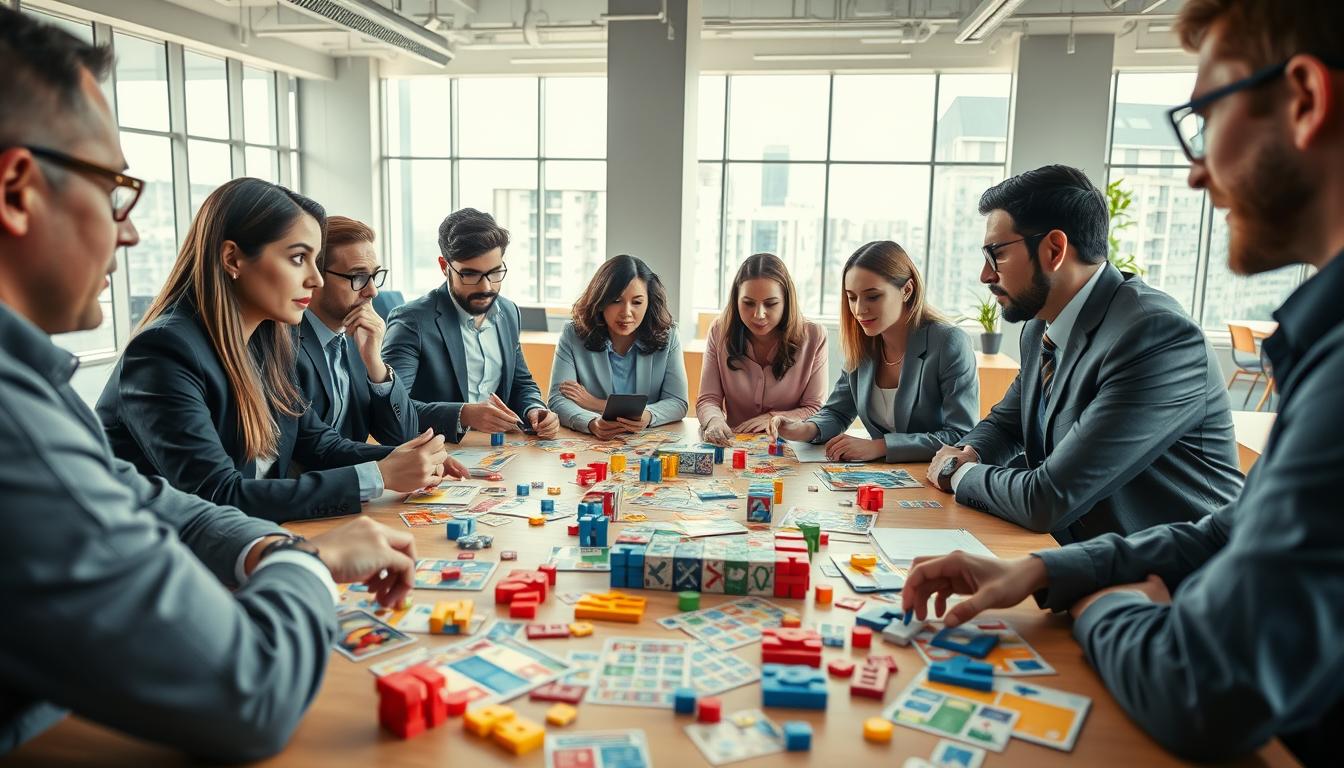
Classic puzzles: tangrams, jigsaws, 3D models
Start with tangrams and jigsaw puzzles to train shape recognition and edge matching. Move on to 3D puzzles and model kits that demand depth cues and alignment.
Progressive difficulty—more pieces, less symmetry—helps you notice how shapes join and how hidden faces align during assembly.
Board and digital strategy
Play chess or Go to practice lookahead visualization and pattern planning. These titles reward predicting piece trajectories and spatial structure.
Include Tetris-like stacks or sandbox builders such as Minecraft to force quick orientation judgments under time pressure.
Mental imagery drills and memory palace
Try short exercises: pick an object, rotate it mentally 90°, 180°, and 270°, then compare to the real item. Close your eyes between rotations to strengthen internal models.
Use the memory palace to tie facts to familiar loci. Walk the route in your mind and place vivid images at fixed spots to boost memory and visualization together.
- Vary constraints: limit viewing time or remove reference images to train faster decisions.
- Log difficulty, piece counts, and completion times to chart progress and guide training choices.
Hands-on activities to strengthen spatial skills
Working with paper, pencil, and a camera teaches how parts sit together in real space. These practical routines turn abstract concepts into habits you can practice daily.
Drawing, sketching, and photography for composition
Do contour drawing and perspective sketching to map proportions and depth. Practice vanishing points and relative sizes so rules stick.
Use photography assignments that focus on leading lines, symmetry, and foreground-background separation. Framing scenes trains visual awareness and helps you spot useful patterns in design.
Origami and paper folding to train geometry
Start with simple bases, then move to multi-step models. Folding paper teaches precision, sequencing, and spatial sequencing in small, repeatable steps.
Try timed exercises where you fold or draw under a short limit. This builds decisiveness while keeping accuracy high.
- Redraw the same object from multiple viewpoints to improve mental updating.
- Analyze balance, negative space, and alignment to hone design judgment.
- Keep a visual journal logging sketches, folded models, errors, and fixes for steady development.
- Blend tasks: photograph an object, sketch it, then craft a simple folded model inspired by its shapes.
Tip:Regular short practice sessions beat rare long ones. Track small gains and repeat successful exercises to support lasting development.
Sports and movement for rotation and spatial awareness
Active sports train real-time tracking and quick mapping of players and objects across changing fields. These activities build transferable awareness and spatial skills that help you read motion and act faster.
Basketball, soccer, tennis: tracking, anticipation, and play patterns
Ball sports force constant updates of trajectories and teammate positions. That trains dynamic rotation judgments and sharpens anticipation under time pressure.
Try mirrored pattern drills in basketball or small-sided soccer games to increase decision speed and pattern recognition. In tennis, work on footwork ladders and split-step timing to read spin and direction more reliably.
Dance, gymnastics, martial arts: body mapping and sequence visualization
Movement arts teach internal mapping of the body and sequence visualization. Katas, combinations, and choreographed turns train precise control and repeatable rotations.
These practices improve coordination, timing, and confidence in executing complex sequences.
- Cross-train: alternate a court sport and a movement art to balance external tracking and internal mapping.
- Structure practice with short high-intensity intervals, then slow technical sessions to refine patterns and form.
- Use video self-review: annotate movement paths, spacing errors, and timing to create quick feedback loops.
Integrating sports into a weekly plan adds variety and motivation while reinforcing core skills that transfer to other tasks and improve overall performance.
Leverage technology: VR/AR, CAD, GIS, and training apps
Technology now lets you practice three-dimensional tasks in safe, repeatable settings that speed learning. Use these platforms to focus on specific angle changes, alignment checks, and viewpoint shifts without real-world risk.
Immersive rotation challenges in VR/AR
Try VR or AR scenarios where you align, assemble, or reorient components in 3D. These activities give immediate feedback and score alignment errors and completion time.
Set short drills that lock movement to one axis or specific angles. Repeat until errors drop and speed improves, then broaden the task set to more complex assemblies.
Design tools and GIS to practice 2D–3D transformations
CAD software forces you to switch between orthographic views and rendered models, strengthening spatial visualization and alignment judgment. Build simple models, export views, and compare how 2D plans map to 3D forms.
Use GIS exercises to manipulate layers, projections, and maps so you learn how transformations change relationships and information at different scales.
- Make measurable goals: cut alignment errors, shave completion time, or increase correct assemblies per session.
- Document workflows and naming conventions to lower interface friction and keep focus on orientation and decisions.
- Combine virtual sessions with a real-world follow-up task to boost transfer from screen to physical models.
Many apps include guided tutorials and community challenges. That accessibility helps sustain practice and keeps training varied and meaningful.
Build your training plan: time, progression, and variety
Designing practice around progression and variety makes improvement reliable. Set clear weekly targets, mix activities, and use brief checks to measure change.
Weekly schedule templates and progressive difficulty
Sample week: three short weekday sessions (15–20 minutes) of games and puzzles and one longer weekend block (45–60 minutes) of VR, CAD, or complex tasks.
Include a brief tests session every 2–4 weeks to track reaction time and accuracy. Increase challenge by expanding angles, cutting time limits, or adding mild distractors only when accuracy holds steady.
Mixing games, puzzles, and real-life tasks for transfer
Rotate board play, digital builders, drawing/folding, and sports drills so skills transfer to everyday tasks. Micro-cycles of 2–3 weeks should target one bottleneck, then shift focus to keep growth balanced.
Tracking performance over time with simple logs and tests
Keep a log: date, activity type, angles attempted, completion time, and accuracy. Pair logs with baseline and follow-up tests to quantify development and set realistic goals.
| Session | Duration | Focus |
|---|---|---|
| Weekday short | 15–20 min | Games, puzzles |
| Weekend block | 45–60 min | VR/CAD, real tasks |
| Test day | 10–15 min | Timed tests, metrics |
Tip: Schedule recovery and a monthly challenge day that strings sprints, a tangram, then a short test to simulate transfer and boost motivation.
Overcoming common hurdles and tailoring practice
Training often stalls because practice does not fit an individual’s profile. Small, practical changes reduce anxiety and boost steady progress.
Addressing anxiety and building self-confidence
Normalize nerves: many people feel pressure during timed tests or new tasks. Start sessions with a short warm-up and low-stakes drills to build momentum.
Use positive self-talk and mastery-focused goals. This reframing lowers stress and improves immediate performance while supporting long-term learning.
Individual differences: sex, handedness, and profiles
Research shows group gaps can reflect confidence and framing more than fixed ability. Design practice that reduces social pressure and rewards steady thinking.
Adjust stimuli by mixing symmetric and asymmetric figures and alternating viewpoints to avoid handedness bias and encourage balanced skill growth.
Adapting for ADHD, dyslexia, Parkinson’s, and Alzheimer’s
For ADHD, favor short intervals, clear goals, and immediate feedback to raise evidence accumulation and flexible pacing.
With dyslexia, begin with non-letter shapes and add mirrored items later with explicit parity cues. For Parkinson’s and early Alzheimer’s, slow tasks, high-contrast visuals, caregiver support, and frequent breaks protect accuracy and reduce fatigue.
Reflective learning: log which strategies improve reasoning—chunking shapes, tracing axes—and refine practice over time in a supportive setting.
Conclusion
A clear plan that blends testing, targeted activities, and varied tools makes steady improvement realistic.
Adults can measurably improve key skills by pairing structured tests with focused practice. Choose ways that match your schedule and taste so you keep going. Short, regular sessions of visualization, puzzles, and practical drills add up quickly.
Use periodic checks to calibrate difficulty and spot the most effective way to train. Mix analog and digital activities—board play, origami, VR/AR, CAD/GIS—to broaden transfer and keep motivation high.
Start this week: try a tangram, a brief MRT, or a five-minute sketch. Consistent effort builds memory, sharpens reasoning, and makes navigating space easier in work and life.