Memory-chunking games for adults who need to compress information efficiently

Can a few minutes of targeted practice each day really make you remember more and worry less?
The short answer is yes. Your working memory holds new input for roughly 20 seconds before the brain decides what to keep. The hippocampus helps move the important bits into long-term storage, while the amygdala tags emotional items so they stick.
Chunking is a practical way to group pieces into compact units so busy people can encode and retrieve more in less time without overwhelming working memory. This listicle promises a curated mix of digital and analog activities plus micro-routines that fit short daily windows today.
Expect clear, science-backed tips on how pattern play and focused practice boost the brain’s handling of sequences, names, and paths. Even 5–10 minutes, done regularly and paired with good sleep and low stress, can produce fast wins.
Why busy adults should use chunking to save time and boost focus today
When time is tight, grouping information into small bundles gives you back usable memory. Working memory holds new input for roughly 20 seconds unless you rehearse or group it. Chunking compresses details into meaningful units so people can retrieve the right fact at the right moment.
Attention is the entry point: without focus, even a solid chunk will vanish. Brief, focused practice trains attention and improves how the brain encodes information. Studies show 15 minutes per day over a few weeks can raise attention, processing speed, and visual memory.

Practical steps: use acronyms, story links, or short lists during a commute or lunch. Stack 5–10 minute micro-sessions into your day and track trends to see what helps you improve memory and concentration.
Remember: gains are skill-specific and need consistency. Support the function of memory with sleep, movement, and stress management. For an overview of tested approaches and tools, learn about our approach at tested methods.
How memory, attention, and working memory make chunking effective
Understanding how short bursts of attention shape storage helps explain why chunking works.
Working memory holds and manipulates new input for about 20 seconds before it fades. If you rehearse or prioritize an item, the hippocampus helps transfer it into long-term cortex storage. Strong emotions route through the amygdala and make certain items more persistent.

Short-term vs. long-term memory: working memory’s 20-second window
Short-term memory acts like a temporary buffer. Chunking groups bits into units that the brain can rehearse and move into lasting storage.
Phonological loop, visuospatial sketchpad, and the central executive at work
The classic model has three core parts that guide how you store and use information.
- Phonological loop: holds spoken or written sequences and uses rehearsal—helpful for names and numbers.
- Visuospatial sketchpad: stores mental images, maps, and layouts—vital for paths and spatial tasks.
- Central executive: directs attention, prioritizes pieces, and manages task switching so thinking and decisions stay on track.
Chunking forms clear connections among items, turning several elements into a single unit that the brain can store and retrieve more easily. Exercises and games that target verbal, spatial, and control abilities train the exact systems that make chunking reliable.
Note: even well-crafted chunks fail without focused attention—distraction kills encoding, so attention control is essential to real-world gains.
Best memory-chunking games for adults with overloaded schedules
A few minutes of targeted training each day lets you keep more facts without draining mental bandwidth. Pick short apps and low-tech drills that fit into coffee breaks and commutes.
Digital picks for short sessions
- Lumosity: daily brain training that rotates attention, flexibility, and memory. Studies link 15 minutes/day to better attention and processing speed.
- Peak: quick, intense workouts and leaderboards that motivate players to improve core skills.
- Elevate: focuses on word, vocabulary, and math drills useful for real-world communication.
- CogniFit: assessment-led programs that tailor training to concentration and memorization goals.
Total Brain standouts
- Faces and Names — builds associative recall for social settings.
- Memory Sequence — trains sequence compression using color-sound-number patterns.
- Memory Maze — short visuospatial paths that grow in complexity.
- Think Focus — rapid attention drills to protect encoding from distraction.
Analog and social options
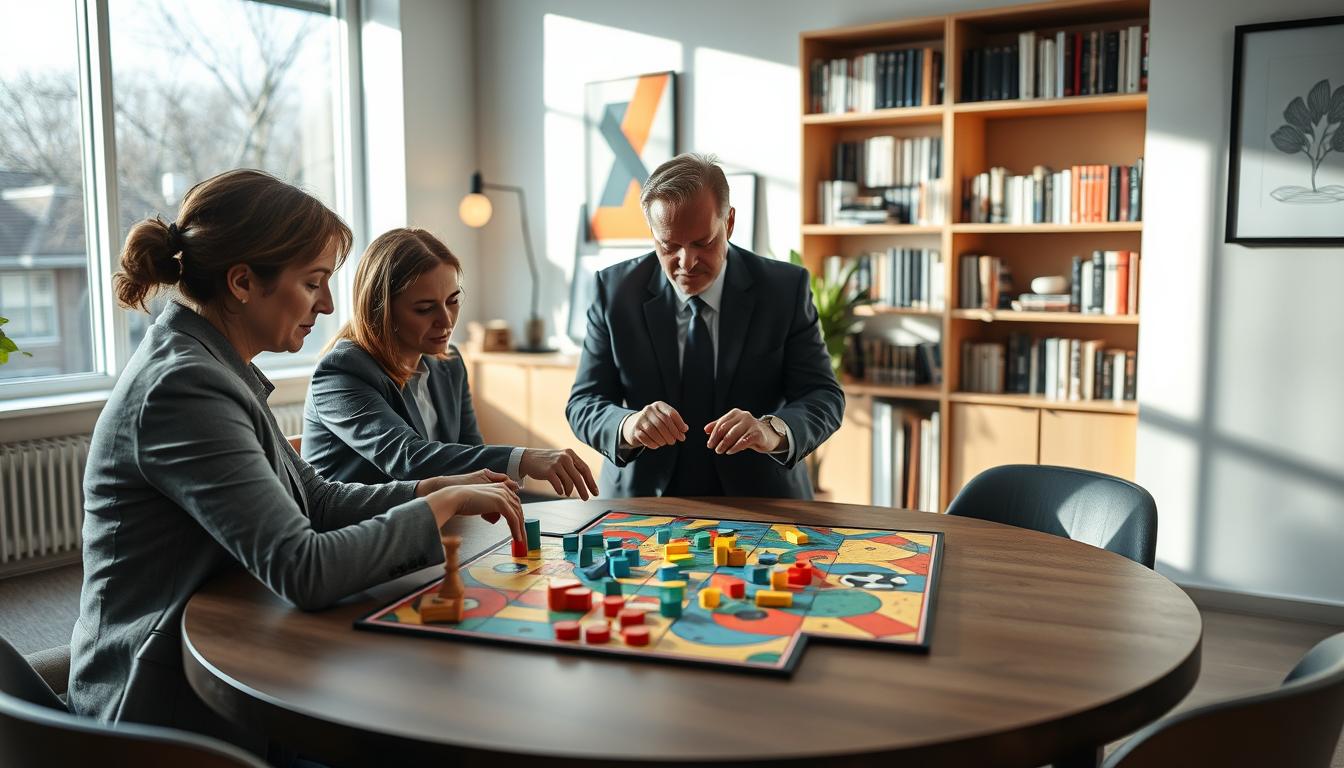
Screen-free practice also works. Try crosswords for clue-driven retrieval, Sudoku for logic, SET (cards) for quick pattern spotting, chess for planning, and trivia nights with friends to boost long-term recall.
How each game trains chunking, patterns, and short-term memory
Specific exercises train pattern spotting, association, spatial maps, and the attention that locks them in. Below we map key titles to the skills they sharpen so you can pick practice that matches your goals.
Pattern recognition and sequence retention
Memory Sequence forces accurate replay of growing color-sound-number strings. Players learn to group elements into threes or acronyms so short-term memory holds longer sequences without overload.
SET speeds visual discrimination by making you spot valid triples across shape, color, and shading. That trains rapid compression of multiple attributes into one usable pattern.
Sudoku builds working memory by keeping candidate numbers in mind while pruning options, a steady exercise in logical thinking and constraint solving.
Association and storytelling
Faces and Names pairs visual cues with stories or puns to bind a name to an image. Crosswords force deep word retrieval through clues, and trivia broadens associative networks across facts.
Spatial and path memory
Memory Maze presents a short path to retrace, increasing complexity as accuracy grows. Portal-style puzzles require mental rotation and spatial mapping, improving recall of routes and layouts.
Attention as the gatekeeper
Think Focus trains sustained attention and fine motor control so information is encoded cleanly. Without that gatekeeper, even good chunks decay quickly.
| Title | Primary skill | Practical tip |
|---|---|---|
| Memory Sequence | Sequence memory, chunking | Group items in threes; use acronyms |
| SET | Pattern detection, speed | Focus on one attribute, then combine |
| Sudoku | Working memory, logic | Sketch candidates to reduce load |
| Faces, Crosswords, Trivia | Association, word retrieval | Narrate micro-stories for names |
- Engage the phonological loop for verbal tasks and the visuospatial sketchpad for paths.
- Let the central executive manage task rules and switching during practice.
- Short, focused play preserves attention and boosts encoding.
Quick routines for overloaded schedules: micro-sessions that fit your day
You can build real recall by fitting tiny training bursts into regular parts of your day. Short micro-sessions protect attention and make training practical even on busy mornings.
Tip: Do 30–60 seconds of mindful breathing before each session to sharpen focus and reduce distractions.
Five-minute commute set
3 minutes: play Memory Sequence or Peak’s sequence drill to practice chunking and increase your best length.
2 minutes: tackle a single crossword clue or an Elevate word task to engage the phonological loop and reinforce recall.
Ten-minute lunch drill
5 minutes: SET pattern sprints or a pocket Sudoku mini to push pattern spotting and logic under time pressure.
3 minutes: review Faces and Names items to solidify associations.
2 minutes: a short Think Focus routine to restore concentration before returning to work.
“Effective training can be short: studies show cognitive benefits from daily 15-minute bouts over a few weeks.”
- Be consistent: one micro-session per day beats occasional long workouts.
- Mix digital and analog resources across the week to keep practice fresh.
- Track progress: log top sequence length, completed clues, or maze levels.
- Avoid alcohol within ~90 minutes after practice to protect consolidation; prioritize sleep for better recall the next day.
- Stack habits: link the commute set to boarding a train and the lunch drill to finishing your meal.
Rotate activities and do a weekly review of a prior challenge to use spaced retrieval and keep gains durable.
Make it stick: habits, limits, and health factors that improve results
Small, regular habits unlock steady gains in how your brain stores and recalls new information.
Consistency beats intensity. Tie brief sessions to daily cues like a commute, lunch, or wind-down. Short routines repeated often form stronger habits than rare marathon practice.
Consistency beats intensity
Do 5–15 minutes daily and track one micro-metric: longest sequence, fastest SET round, or maze level. That visible progress keeps motivation high.
Know the limits
Training tends to be skill-specific. Logic drills boost related skills but won’t transfer broadly unless you rotate verbal, spatial, and attention tasks.
Variety is a great way to avoid plateaus and build complementary abilities that support chunking across contexts.
Support the brain
Stress harms memory via cortisol; simple breathwork and short meditations reduce that risk. Sleep helps consolidation—aim for consistent rest after practice.
Write and say chunks aloud to build richer connections. Social play like weekly chess or trivia adds accountability and broader knowledge gains for people and individuals alike.
“Steady, varied practice tied to daily life is the most reliable path to lasting gains.”
Conclusion
Short, targeted practice can reshape how your brain stores everyday facts.
Chunking, association, and pattern recognition help compress information so the mind retains more in less time. A curated mix of digital and analog games and puzzles is a great way to improve memory and sharpen attention in compact sessions.
Start small: pick one memory game and one word task each day, then add spatial or focus drills as you feel ready. Download an app like Lumosity, Peak, Elevate, or CogniFit, grab crosswords, Sudoku, or SET cards, and set a firm slot.
Invite friends for weekly trivia or chess to keep players engaged. Use mindful attention at the start, jot key chunks in a quick note, and track wins. Pick a commute set today, schedule a lunch drill, and make steady training part of daily life.