Emotional-cognition balance games supporting adults undergoing psychological therapy

Can a simple prompt or a familiar pastime unlock honesty faster than a long talk?
Therapists now use structured play and task-based prompts to help adults open up without pressure. These session tools lower defenses, build trust, and invite genuine participation from each person.
Clinicians adapt cards, board titles and digital activities — from Mindful Moods to adapted card sets — so adults can explore feelings alongside thinking. This approach supports emotional intelligence and awareness while keeping focus away from intense eye contact.
The guide ahead lists real tools used in practice, how to pick one by goal and setting, and simple facilitation tips. It also covers consent, trauma-informed pacing, and options for individual, couples, or group work.
Expect evidence-backed benefits: clearer communication, stronger problem-solving, and better social skills. These methods complement core therapeutic work and offer a respectful, permission-based way to do that work.
Understanding user intent: what adults in therapy need from games and activities
Many clinicians now select short, structured activities that let a person share without feeling exposed.
People come to sessions wanting respect for what they carry. They look for tools that help name feelings and practice communication without pressure.
Common barriers include skepticism about play, worry about seeming childish, and group dynamics that feel unsafe. Therapists address these by offering clear purpose and opt-in choices.

- Provide dignity: activities should feel purposeful, not performative.
- Offer multiple response modes: verbal, written, or visual options help others participate.
- Keep it short: brief exercises fit real session time and protect health and energy.
Shared-focus tools reduce social pressure while building awareness and emotional intelligence. Good design matches difficulty to readiness, so a person can step in or step back safely.
Before choosing an exercise, ask about preferred ways to participate and things that help the person feel at ease. That simple question improves engagement and outcomes.
Why games work for adults: emotional regulation, connection, and skill-building
Short, structured activities help people name feelings while staying grounded. They create a predictable frame that lowers arousal and invites participation without pressure.
Evidence-based benefits: communication, problem-solving, and social skills
Clinicians report clearer communication, improved problem-solving, and stronger social skills after using play-based tasks. Studies and practice notes show that rule-driven interaction supports self-control and reading social cues.
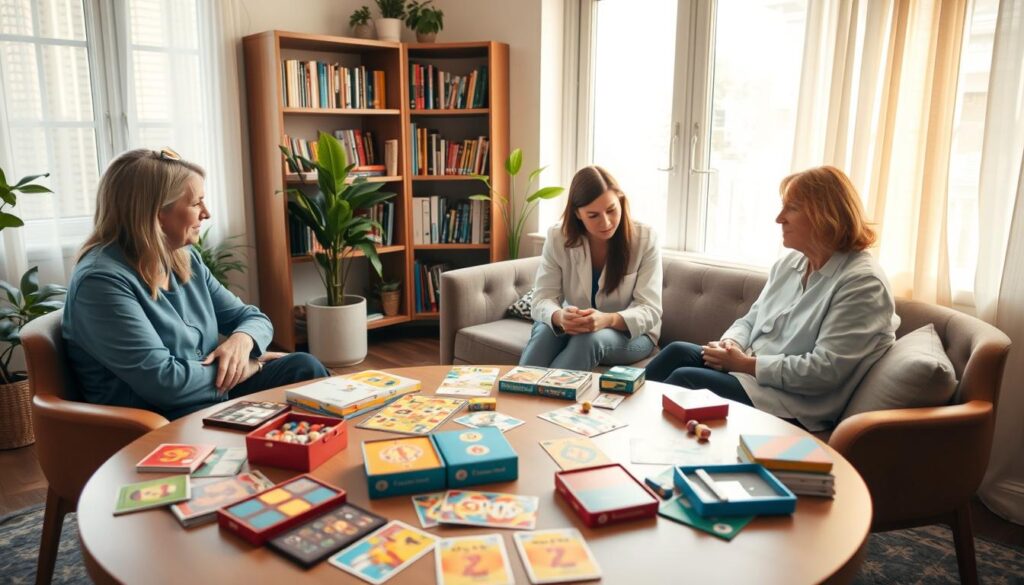
From “play” to practice: lowering defenses to access real feelings
Shared-focus tasks reduce direct confrontation and let emotions surface with less resistance. Turn-taking, predictable rules, and light humor slow interactions and build trust.
- Adapted commercial options—Uno for pattern work, Jenga for pacing, Catchphrase for expressive prompts, Set for cognitive flexibility—serve clear clinical work.
- Question cards translate vague thoughts into concrete prompts that connect to feeling without pathologizing.
- These exercises teach stress management by offering clear feedback and small, repeatable steps that transfer to home and work.
“Play is not frivolous; it is a delivery system that creates conditions for honest sharing.”
How to choose the right tool: goals, setting, and participant safety
Choosing the right activity starts with a clear statement of what the session must achieve.
Begin by naming the goals: grounding, communication repair, problem-solving, or values work. Match the activity’s purpose to that aim and keep the exercise brief.
Consider the setting. Time, privacy, group size, and telehealth limits dictate which tool will work. Bring a lower-intensity option for short sessions.
Prioritize participant safety and consent. Use tools that allow passes, opt-ins, and multiple response formats. Avoid rigid rules that require disclosure.
- Align complexity to current stress: simple, structured tasks during high stress; deeper reflection when regulation is stable.
- Check cultural fit and adult-appropriate tone to protect dignity and communication.
- Prepare a backup activity with a different energy profile.
| Goal | Best Setting | Safety Features | Typical Tool |
|---|---|---|---|
| Grounding | Short individual or group session | Passes, sensory options | Breath prompts / simple card pull |
| Communication repair | Private couples or small group | Opt-in cards, timed turns | Structured prompts / dialogue cards |
| Reflection | Longer one-on-one session | Variable depth, written response | Prompt decks / journaling task |
| Problem-solving | Group or skills session | Choice-based participation | Collaborative challenges |
“A short, clear frame reduces anxiety and helps participants know why the activity supports session health.”
Accessibility first: affordable, adaptable, and inclusive options that respect adults
Low-cost, thoughtfully designed activities make emotional work accessible without sacrificing dignity.
Choose printables and sliding-scale decks that reduce financial stress and honor life experience. Visible previews help clinicians and people know tone and content before use.
- Low-cost options: Therapist Aid printables (Mindful Moods), therapist-made PDFs on Etsy, and sliding-scale decks with full previews to cut stress.
- Adult-respecting design: clear language, mature visuals, and choices that preserve dignity and promote health.
- Adaptable formats: allow passes, visual or journaling responses, and variable pacing so everyone can participate their own way.
- Repurposable decks: reframe We’re Not Really Strangers or Dixit as reflective prompts to build emotional intelligence without new purchases.
- Group accessibility: high-contrast printables, readable fonts, and culturally sensitive wording to include more people comfortably.
“Accessibility reduces avoidance: when tools fit needs and budget, participation rises in a healthy way.”
Store small sets in labeled envelopes or digital folders to reuse exercises across sessions. This practical library supports long-term use and meaningful progress.
Safety, consent, and trauma-informed setup for therapy sessions
A clear, upfront statement of choice helps participants join without pressure.
Begin each session by explaining consent, choices, and how any activities or games will be used. This short frame lets people know they can opt out and helps everyone feel safe.
Normalize passes and opt-ins. Make it explicit that writing, selecting a card, or silently holding a response counts as valid participation. Avoid forcing public disclosure or prolonged eye contact.
Opt-ins, passes, and multiple response formats
Offer several ways to respond: speaking, writing, drawing, or pointing to a visual prompt. Let people pick what fits their comfort and sensory needs.
- Co-create ground rules with the group to protect confidentiality and respectful listening.
- Use seating and focal points (cards, boards) to reduce direct gaze and intensity.
- Train facilitators to watch for signs of distress and to pause or scale back activities.
| Practice | Why it helps | How to do it | Session fit |
|---|---|---|---|
| Opt-outs & passes | Protects consent and autonomy | Announce a clear pass option before tasks | Any group or one-on-one |
| Multiple formats | Supports diverse expression | Offer verbal, written, or visual choices | Small groups or individual sessions |
| Gradual engagement | Builds trust over time | Start with surface prompts, deepen only with consent | Series of sessions |
| Post-activity grounding | Restores regulation and health | Use breath, sensory checks, or brief movement | Every session close |
Safety and consent are the foundation for meaningful therapeutic work; pacing and clear choice are not optional.
emotional-cognition balance games for adults in therapy
Well-timed prompts and gentle cognitive tasks create a safe frame for reflection.
Journaling card decks, somatic check-ins, and solo reflection kits scaffold introspection without pushing disclosure. These are not party games; they slow pacing and lower stakes so people can process emotions and thoughts with less overwhelm.
Balancing reflection and cognition: prompts that invite awareness without overwhelm
Define balance as pairing emotional reflection with light cognitive tasks like sorting, choosing, or timed turns. That pairing helps regulate stress and keeps focus steady.
- Use open, non-leading prompts and offer choices to write before sharing.
- Structure time with short timers or rounds so sessions feel predictable and safe.
- Shared objects (a card or board) focus attention away from interpersonal intensity.
- Include somatic check-ins—sensory cards that link feelings to body cues without forcing talk.
- Offer solo-friendly tools between sessions to strengthen continuity and insight.
“One clear card can open a conversation—or close it—without overload.”
Do quick temperature checks during the activity and debrief gently, tying discoveries back to goals and health.
Top picks for individual sessions: scaffolded self-reflection and regulation
Use these targeted resources to guide a focused session that builds awareness and self-efficacy. Each pick is brief, concrete, and easy to adapt to telehealth or a short in-person meeting.
Mindful Moods (Therapist Aid)
Printable grounding and sensory cues help lower stress fast. Give one sheet with prompts such as “name three textures you can feel.”
These exercises work as an opener or between-session check-in to steady mood and attention.
Feeling Wheel and emotion mapping
The Plutchik-based wheel expands emotional vocabulary. Use it to label intensities, link feelings to thoughts, and map triggers.
Clients can mark zones, draw connections, or write a single-word check before sharing.
Letter to Myself
This expressive exercise supports values-aligned goal setting. Prompt future-dated notes with concrete next steps and a compassionate tone.
Letters double as progress markers when reviewed later.
Plan Your Pomodoro
Co-create short work sprints with timed breaks to manage focus, stress, and mood shifts. Track mood and thoughts across intervals to build metacognitive awareness.
- Assemble a personalized kit: sensory cue, mapping tool, expressive prompt, and a planning aid.
- Use one card or prompt as a gentle opener to avoid flooding feelings.
- Offer writing, drawing, or word-choice options rather than requiring speech.
“Small, scaffolded activities create durable gains when matched to session goals.”
Couples therapy activities that invite trust, empathy, and de-escalation
A single well-chosen question can lower guard and invite clearer listening between partners.
Structured dialogue cards help partners move past small defenses. They frame one question at a time so a person can answer without being interrupted.
“The And” (The Skin Deep): dialogue cards that bypass defenses
The And uses intimate prompts like “What do you wish I knew?” to open honest sharing. Select cards that match current capacity and allow passes.
Set simple rules: no interruptions, timed turns, and permission to pause. These keep the focus on trust and safe communication.
Perspective swaps and conflict-role reversals
Have partners briefly argue a point from the other’s view. This playful shift often reveals blind spots and reduces escalation.
- Use one question card each round and name one strength you notice in the other.
- Keep exercises short and time-limited to maintain dignity and align with session goals.
- Debrief to link insights to patterns and agree on one small piece of work to try between sessions.
“Small, repeated shifts in how partners talk build trust over time.”
Group therapy games that build participation, safety, and shared language
Well-framed group work builds common language so people can talk about stress clearly.
Emotion Charades and Feeling Cards
Use movement-based prompts to let participants act or mimic feelings. This invites laughter and recognition without asking for personal stories.
Offer nonverbal rounds and allow passes. That keeps people feeling safe and lowers performance pressure.
Values sorting: strengths, goals, and group dynamics
Give each person a small set of value cards to rank. Members name one reason a card matters rather than tell a life story.
Notice how chosen values line up with group strengths and goals. Document choices to revisit later.
“When I feel…” circle
One person names a feeling. A different participant describes a typical action they notice when they feel that way.
Rotate roles (picker, describer, reflector) and keep rounds brief. This builds emotional intelligence and clearer communication across groups.
- Set norms: passing allowed, multiple response modes welcome.
- Start with nonpersonal expression and scale depth by readiness.
- Close with a short grounding exercise to restore regulation.
| Tool | Purpose | How to run | Session fit |
|---|---|---|---|
| Emotion Charades | Nonverbal recognition | Act, guess, reflect; allow pass | Short group warm-up |
| Values Sorting | Clarify priorities | Rank, share one reason, record results | Mid-session discussion |
| “When I feel…” | Link feelings to actions | One speaks, another names action; rotate | Short reflective round |
Workplace-friendly emotional intelligence activities for teams
Micro-exercises designed for meetings let people signal capacity and connect with one another faster.
Weather Check-in uses weather metaphors to share mood quickly. Each person names their current mood as a weather system. This creates safe, brief communication and builds team awareness.
Leadership Pizza
Leadership Pizza breaks competencies into slices: strengths, gaps, and actionable goals. Teams self-rate, note one strength, and set a small goal. Managers can track progress on a simple worksheet to align development with business needs.
Everyday Hassles
List small stressors and then brainstorm alternative responses. This exercise practices resilience and reduces escalation during real work stress.
- Facilitators should set boundaries, respect nonparticipation, and watch group dynamics.
- Use digital whiteboards or chat for remote participants.
- Repeat these checks periodically to measure mood patterns and improve communication.
| Activity | Purpose | Time | Remote option |
|---|---|---|---|
| Weather Check-in | Mood awareness | 3–5 min | Chat poll or whiteboard |
| Leadership Pizza | Skills & goals | 10–20 min | Shared doc & breakout rooms |
| Everyday Hassles | Resilience practice | 10 min | Collaborative list in chat |
“These tools improve collaboration under stress but do not replace clinical therapy.”
Neurodivergent- and trauma-sensitive tools that help participants feel safe
Using color, texture, and simple icons helps people name thoughts without pressure.
Adapt an Inside Out style of “thought bubbles” and “feeling colors” so people can point, sort, or match instead of speaking. This lets participants express private thoughts and emotions indirectly.
Offer sensory-friendly options: textured cards, soft objects, or quiet fidget tools to lower arousal while engaging with prompts. Provide multiple entry points—observe, select, label—before asking anyone to talk.
Sensory-friendly choices and visual prompts
Use color-coded bubbles to link a thought (grey bubble) with a feeling color (blue = calm, red = upset). Let people place tokens on bubbles or write one-word labels. These visuals increase awareness without forcing disclosure.
Gradual engagement frameworks: moving from surface to depth
Start with noticing exercises, then guided choices, then optional personal connections only when readiness is clear. Translate practice into daily routines: brief visual check-ins and simple regulation tools between sessions help health and continuity.
- Respect communication differences: allow written, drawn, or selected responses rather than requiring speech.
- Avoid loud or competitive options; prefer slow, predictable pacing and clear transitions.
- Clarify boundaries upfront and reinforce that passing is always acceptable.
- Train facilitators to titrate stimulation and step down intensity if signs of overwhelm appear.
| Feature | How it helps | Best use | Session fit |
|---|---|---|---|
| Textured cards | Regulate arousal through touch | Pair with color prompts | One-on-one or small group |
| Thought bubbles | Indirect labeling of thoughts | Sort, point, or place tokens | Opening check-in |
| Feeling colors | Nonverbal emotional mapping | Match color to body cue | Mid-session reflection |
| Gradual ladder | Limits overwhelm; builds trust | Notice → choose → connect | Series or repeated practice |
“Small, sensory-informed tools let people engage on their own terms and build emotional intelligence over time.”
Low-cost, printable, and DIY-friendly tools clinicians actually use
Simple, well-chosen printables can expand access while keeping dignity and clinical purpose front and center.
Start with Therapist Aid’s Mindful Moods and similar printables. Many creators offer sliding-scale or pay-what-you-can downloads that work well for brief grounding, feeling ID, and short exercises.
Practical starter kit
Curate a small set: grounding sheets, a feeling wheel, and a deck of sliding-scale prompts. Laminate high-use cards and color-code by theme—regulation, values, and communication—for quick selection during a session.
Repurposing and customization
Repurpose commercial decks like We’re Not Really Strangers by pre-selecting questions that match session goals and removing invasive prompts. Create custom prompts using client language to increase resonance and support strengths.
- Create a lender library for group programs so people without resources can still engage.
- Use short, standalone exercises that fit a single session or sequence them into a plan.
- Keep simple tracking sheets to note which tools help which people and contexts.
Do periodic audits: retire items that don’t land and expand those that consistently support health and emotional intelligence. Cost should not block access—smart selection of tools and activities can deliver strong clinical support on a budget.
Board and online games adapted for therapeutic goals
A short, familiar board or app can open a low-stakes door to conversation in clinical sessions.
Use mainstream sets to teach pacing, turn-taking, and emotion management without heavy disclosure.
Uno, Jenga, Catchphrase, Set: rapport, flexibility, and cognition
Uno supports turn-taking and pattern matching. It offers chances to practice coping with winning and losing while peers notice reactions.
Jenga trains pacing and anticipation. Pulls become prompts to name body cues as stress rises and to choose a calmer response.
Catchphrase encourages expression and flexible wording. Remove timers to reduce pressure and boost participation from quieter people.
Set builds visual pattern recognition and working memory. It works well for clients who benefit from structured, visual exercises tied to attention skills.
Virtual sand play and simple digital tools to support participation
Virtual sand trays let people shape metaphors online while the facilitator guides themes and thoughts. Screen-sharing keeps exploration private but visible.
Use polls, shared whiteboards, and simple timers to increase remote clarity and participation. Adjust rules—slower pace, team play, optional commentary—so the activity matches health and readiness.
| Tool | Primary benefit | Session fit |
|---|---|---|
| Uno | Emotion management, turns | Groups & pairs |
| Jenga | Pacing & reflection | Short in-person |
| Virtual sand | Metaphor & expression | Telehealth |
Debrief gently: link in-play choices to real-world communication and daily ways of working.
Facilitation tips: read the room, frame the purpose, and honor passes
Open with a short, permission-first statement that names the goal and the choice to stop. Say something like, “If this doesn’t feel helpful, we can stop.” That line reduces stress and protects trust.
Scan energy and cues—voice tone, posture, and eye contact—to read the room. Choose tools that offer relief, not retreat. Start small: a single-card check-in or a brief sensory prompt lets people join without pressure.
- Honor passes silently; opting out is valid participation and keeps psychological safety intact.
- Use plain language and offer writing, drawing, or pointing as response modes to support inclusive communication.
- Notice group dynamics like interruption or caretaking and name them gently to rebalance airtime.
- Keep timing tight, signal transitions, and debrief with one or two questions that link the activity to real goals.
“Permission-first framing and quick checks of readiness protect trust and increase honest participation.”
| What to do | Why it helps | Quick example |
|---|---|---|
| Frame purpose | Reduces uncertainty and stress | “We have one goal: notice one feeling.” |
| Read cues | Matches pace and depth to readiness | Slow down if many people look tense |
| Honor passes | Protects consent and trust | Allow silent placement of a card |
Close with a short regulation: breath, stretch, or a sensory check. Note what landed and refine your plan for the next sessions. This practice builds emotional intelligence and strengthens ongoing facilitator skill.
Structuring a session: openers, bridges, closers
A clear session frame supports regulation, communication, and measurable steps toward goals. Use three simple parts so people know what will happen and can choose how to take part.
Openers: single-card check-ins and grounding
Begin with a 1–2 minute grounding exercise—breath, sensory cue, or a single-card feelings check-in. This sets the tone and clarifies participation choices like passing or writing instead of speaking.
Make prompts explicit and offer a visible timer so people predict the pace and feel safe to join.
Bridges: shared-focus activities that support communication
Move into a short shared-focus activity such as values sorting or a structured dialogue card. Keep this middle segment 5–10 minutes and align it to the session goals.
Offer alternative routes—writing, drawing, or silent placement—so people who prefer nonverbal participation count as full contributors.
Closers: reflection prompts and small wins
End with a brief reflection: one small win, or the prompt “I used to think… now I think…”. This helps stabilize mood and consolidate learning.
Build in a micro-pause between segments to check capacity and document which opener/bridge/closer combo produced the best participation. Invite a quick between-session exercise to encourage carryover.
“A tight, visible frame reduces uncertainty and makes each exercise serve the session goals.”
| Segment | Purpose | Time |
|---|---|---|
| Opener | Regulate mood, set choices | 1–2 min |
| Bridge | Explore communication and goals | 5–10 min |
| Closer | Integrate insight, mark progress | 2–5 min |
Measuring impact: participation, mood shifts, and goal progress
Small, repeatable measures make clinical progress visible without overwhelming anyone. Track brief signals after an activity: who stepped forward, which prompts landed, and whether language moved from vague to specific. Use these simple data points to guide tool selection and planning.
What success looks like: from resistance to engagement
Define clear indicators tied to your goals before running an exercise. Use a 0–10 mood rating just before and after an activity to show regulation effects. Note actual participation types—speaking, writing, or selecting—to capture how people prefer to engage.
- Success indicators: more opt-ins, richer emotion words, fewer shutdowns, and improved tolerance for ambiguity during a session.
- Use pre/post mood checks to visualize regulation and health gains and chart small shifts over time.
- Track participation modes and link them to goals like communication frequency or problem-solving steps.
- Record qualitative shifts in thoughts and narratives—moving from blame to curiosity signals progress.
- Assess which tools reduce stress or boost engagement and iterate on selection accordingly.
Include client-reported outcomes (usefulness and perceived safety) and log concise session notes to inform treatment planning. Celebrate small wins, normalize plateaus, and revisit goals quarterly to keep progress purposeful in therapy.
Common pitfalls and how to avoid them
Even well-meaning activities can backfire when tone, pace, or rules miss the room.
Choose tools that respect the session setting and the people present. Avoid prompts that feel juvenile; they erode trust and make participation awkward.
Never require disclosure. Rules like “everyone must answer” raise stress and reduce consent. Offer passes, writing, or silent options instead.
- Watch intensity: an exercise that’s too deep too soon will shut groups down; too light during crisis feels avoidant.
- Mind logistics: cramped space, noise, or tech glitches can derail an activity; prepare simple backups.
- Track dynamics: monopolizing, cross-talk, or silence need facilitator intervention and clearer turn-taking rules.
- Limit overprocessing: keep debriefs short and focused to avoid turning a tool into a lecture.
- Avoid excessive competitiveness; favor cooperative or reflective modes to lower stress.
- Reflect on bias: pick tools that serve client goals, not facilitator preference, and ask for feedback regularly.
| Pitfall | Effect | Quick fix |
|---|---|---|
| Juvenile tone | Loss of trust | Use mature wording and visuals |
| Forced disclosure | Raised stress | Allow passes and alternate formats |
| Mismatch of intensity | Shutdown or avoidance | Scale depth; have a low-intensity option |
| Poor logistics | Activity failure | Test tech and space; carry backups |
Always close with grounding. That final step helps people leave regulated and keeps the session useful for ongoing therapy.
Where to find and how to evaluate tools before you buy
Before adding a new kit to your shelf, confirm that it serves a clear clinical purpose and matches client needs.
Start with trusted sources: Therapist Aid, PositivePsychology.com, sliding-scale creators, and reputable repurposable decks. Look for full-card previews, facilitator guides, and demo videos so you can judge tone and depth quickly.
Preview depth, flexibility, and tone; prioritize adaptability
Check whether a tool allows passes, multiple response formats, and easy rule changes. Flexibility makes a product useful across one-on-one, group, and telehealth settings.
- Shop smart: sample printable pages and short demo sessions before purchase.
- Assess cultural fit: scan language and examples to avoid alienating prompts or biased questions.
- Weigh format: laminated sets last longer; digital options should work on low-bandwidth calls to protect health and access.
- Pilot with a small group and document what it supports—regulation, communication, or cognitive growth—and map purchases to gaps in your library.
- Ask peers for real-world feedback before buying in bulk.
“A quick trial reveals whether the material respects dignity and clinical purpose.”
Conclusion
A single respectful activity can shift tone and invite real sharing.
Well-chosen games are adult-respecting structures that make hard things more workable in therapy and in life. They pair emotion and light cognitive steps to support health, relationships, and work outcomes.
Use consent-first, trauma-informed practice to protect safety and build trust across one-on-one, couples, and group settings. Start small: one card, one shared-focus moment, one simple question. Observe what helps and what to retire.
Progress is cumulative. Repeated, respectful practice builds emotional intelligence, greater awareness, and real success in daily life and at work. Pick one tool, frame it clearly, and watch how the way into honesty can change a session and a person gently.