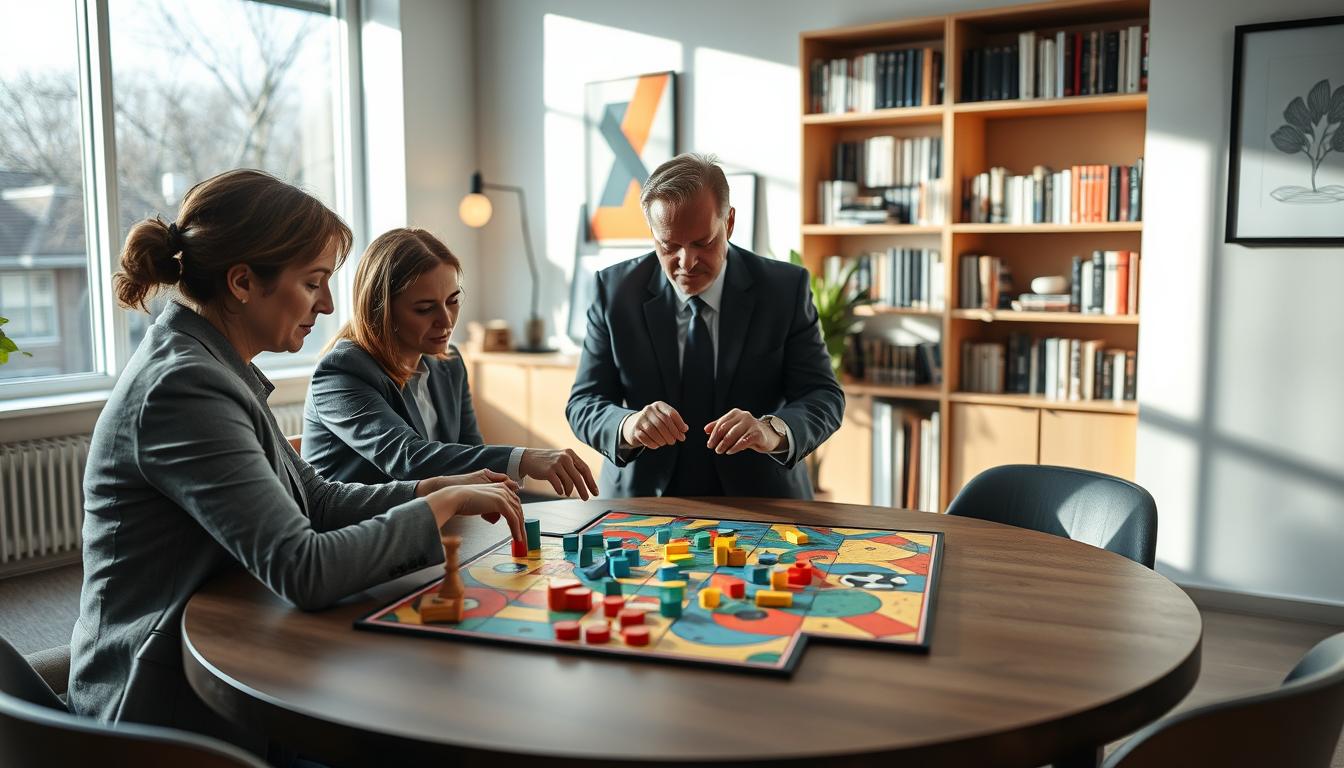
Decision-timing educational games adapted for adults with chronic indecision

Can a few minutes of timed play each day change how you choose? This guide shows how targeted digital practice can tighten focus and speed thought. We introduce practical steps and quick routines that lower the cost of trying new approaches.
The method centers on one simple tool: educational decision-timing games for adults with indecisiveness. Short, timed micro-challenges copy real-world pressure with timers and instant feedback. Repetition and quick outcomes shorten feedback loops and train reaction control.
Modern life often compresses time to act. People juggle work, messages, and sudden changes and need faster decision habits. These sessions take five to ten minutes and build clarity without high stakes.
Readers will learn how the tasks train attention, why the brain adapts, and simple routines to track gains. Expect measurable changes in time to choose, fewer second guesses, and rising confidence as you practice.
Why decision-timing games help adults who feel stuck when making choices
Compressed rounds of play recreate everyday urgency and coax action from feeling stuck thinking.
Fast-paced tasks mirror real-world moments when time is limited. Timers, pop-up obstacles, and shifting patterns force quick prioritization. That stress-free rehearsal teaches people to act despite the pressure.
Immediate results change the question from “What if?” to “What did I learn?” Instant feedback shortens the thought loop and builds plain clarity about which choices matter.
- Timed play recreates being on the clock, helping people translate pressure into decisive action instead of delay.
- Compressed windows cut noise and surface the few options that move progress forward.
- Repeated short bursts reduce hesitation and reinforce quick, practical decision habits.
- Skills such as visual scanning, focus, and reaction control transfer to meetings, email triage, and deadline work.
- Micro-sessions feel manageable, boost motivation, and keep practice consistent.
Constraints nudge creativity and low stakes make trying new paths less risky. Over time, this pattern of play helps people start tasks sooner, choose without second-guessing, and adjust calmly when plans shift.

What fast-paced play trains: speed, focus, and flexibility under pressure
Short, timed drills nudge the brain to act faster while keeping judgment intact. These micro-sessions force quick prioritization and reduce the space for rumination.
Timed challenges that build clarity and confidence when the clock is ticking
Countdowns sharpen selective attention. Strict limits ask you to choose what matters now, which builds clarity and steady confidence.
Pattern recognition and adaptation to shifting cues in work and life
Players train to spot a repeating pattern in shapes, sounds, or signals and predict what comes next. That skill helps when project priorities or stakeholder asks change in real time.
Instant feedback loops that reduce overthinking and accelerate learning
Immediate outcomes turn each attempt into data. Failed moves show what to fix; quick pivots replace long second-guessing with purposeful action.
Try brief examples: tap at precise moments, sort items under shifting rules, or sequence tasks on a short timer. Five-to-ten-minute sessions improve visual scan speed and flexible thinking, and you’ll notice faster decision times and fewer errors.

The neuroscience of indecision and how games counter common mental roadblocks
Neural circuits shape how we weigh choices, and brief practice can shift those circuits toward action.
Indecision often reflects weaker prefrontal control and mixed reward signals. The prefrontal cortex plans and prioritizes; dopamine tags options with value. When these systems falter, weighing outcomes and committing becomes hard.
An overactive amygdala raises fear and spikes stress. Low serotonin links to mood swings and impulse trouble. Together these factors tilt thinking toward avoidance rather than choice.
Prefrontal control and dopamine
Timed micro-tasks train valuation and prioritization by forcing focused selection under a short clock. Quick wins boost dopamine, which increases motivation and rewards follow‑through.
Amygdala and serotonin
Low-risk, repeatable challenges reduce fear responses and lower stress peaks. Predictable sessions help stabilize mood and improve impulse control so choices feel less threatening.
| Brain system | Common problem | How short practice helps |
|---|---|---|
| Prefrontal cortex | Weak prioritization | Structured selection drills strengthen control and faster decision-making |
| Dopamine | Low motivation | Immediate scores normalize reward signals and encourage follow-through |
| Amygdala / Serotonin | High fear / mood instability | Short, safe exposures reduce fear and lower stress during choices |
Over time, repeated success recalibrates perceived difficulty. That builds tolerance for uncertainty and clearer thinking when real decisions arrive.
Educational decision-timing games for adults with indecisiveness: a step-by-step setup
A clear setup turns brief practice into real change: define domains, pick formats, set rules, and track results. Keep sessions short so they fit busy days and yield steady wins.
Choose the decision areas to train
List concrete domains where you want faster choices: work tasks, personal logistics, daily options. Limit to two or three targets per week.
Pick short digital formats that fit your schedule
Use mobile or browser micro-challenges with visible timers and instant scores. Five-to-ten-minute rounds keep fatigue low and boost repeat use.
Set simple session rules and a reflection habit
Rule example: 7 minutes, one goal, no replay until quick notes are taken. After each round, jot what worked and one tweak.
“Small, repeatable challenges make it easier to act and to learn from each choice.”
- Log start time, mode, decisions made, and one next-step.
- Tie one session to a real action: make decision on a pending item immediately.
- Gradually tighten timers or add shifting rules to increase challenge.
| Step | Quick goal | Why it helps |
|---|---|---|
| Define domains | Work / personal / daily | Focus on relevant options |
| Choose format | Mobile or browser | Clear time boundary |
| Track results | Short log | Turns information into better action |
Practical decision frameworks to pair with timed play
Frameworks act like a map that lets timed practice translate into better decisions. Use a few repeatable tools to turn short practice into clearer action. These make it easier to choose without overthinking.
Values list and 1-5-10 year alignment to speed up clarity
Create a ranked values list tied to daily realities, such as schedule flexibility or steady income. Then sketch where you want to be in one, five, and ten years and test which option points straight at that picture.
Many people find clarity within an hour by focusing on regret minimization and quick tests. Limit outside advice to three to five trusted voices so other priorities don’t dilute your own rubric.
Three-option narrowing, pro-con on paper, and the coin-flip gut check
- Narrow fast to three options, then compare each against your top values and long-term plan.
- Write pro-con lists on paper to externalize questions and expose hidden assumptions.
- Use a coin flip for low-stakes choices; note your gut reaction to the outcome.
Run small, low-risk tests—shadow someone, prototype, or sample—before big commitments. Keep a simple strategy: values fit, years alignment, and evidence from tests. Then practice making similar calls under a clock to build speed and confidence.
Turn practice into progress: daily routines, group play, and metrics
Small time-boxed rounds create a rhythm that nudges hesitation into action. Short cycles of five to ten minutes build mental agility without eating your days. Keep sessions brief so they fit between work blocks or during a school break.
Five-to-ten-minute cycles, mental resets, and simple success indicators
Set a daily cadence: one to three short sessions most days. This steady practice trains faster choices and reduces fatigue.
Use group play sparingly. Small groups add accountability and shared learning, but keep rounds tight to protect focus.
Slot rounds between tasks at work or during school pauses as a mental reset. Immediate feedback helps you correct errors fast.
| Routine | What to measure | Why it helps |
|---|---|---|
| Daily short sessions | Time to decide | Shows speed gains over days |
| Group rounds | Second guesses | Accountability and shared tips |
| Post-session action | Action on pending tasks | Reinforces transfer to work |
| Themed days | Decision accuracy | Targets specific bottlenecks |
Keep your measurement lightweight—a quick checklist or note. Review weekly trends and adjust focus to keep momentum and track real success.
Conclusion
A few focused minutes each day can shift how you weigh options and act.
Fast, timed practice builds clearer habits people carry into work, school, and home life. Instant feedback moves thinking away from fear and toward controlled action based on fresh information.
The brain benefit is real: tighter prefrontal control and small dopamine wins make it easier to commit. Use practical tools—values alignment, 1-5-10 year checks, three-option narrowing, quick pro-con notes, and coin flips—to speed choices.
Start small. Schedule a five-minute micro-challenge today, make one pending choice, then answer: what did I learn? and what will I do differently tomorrow? Tiny repeats add up to steady progress.