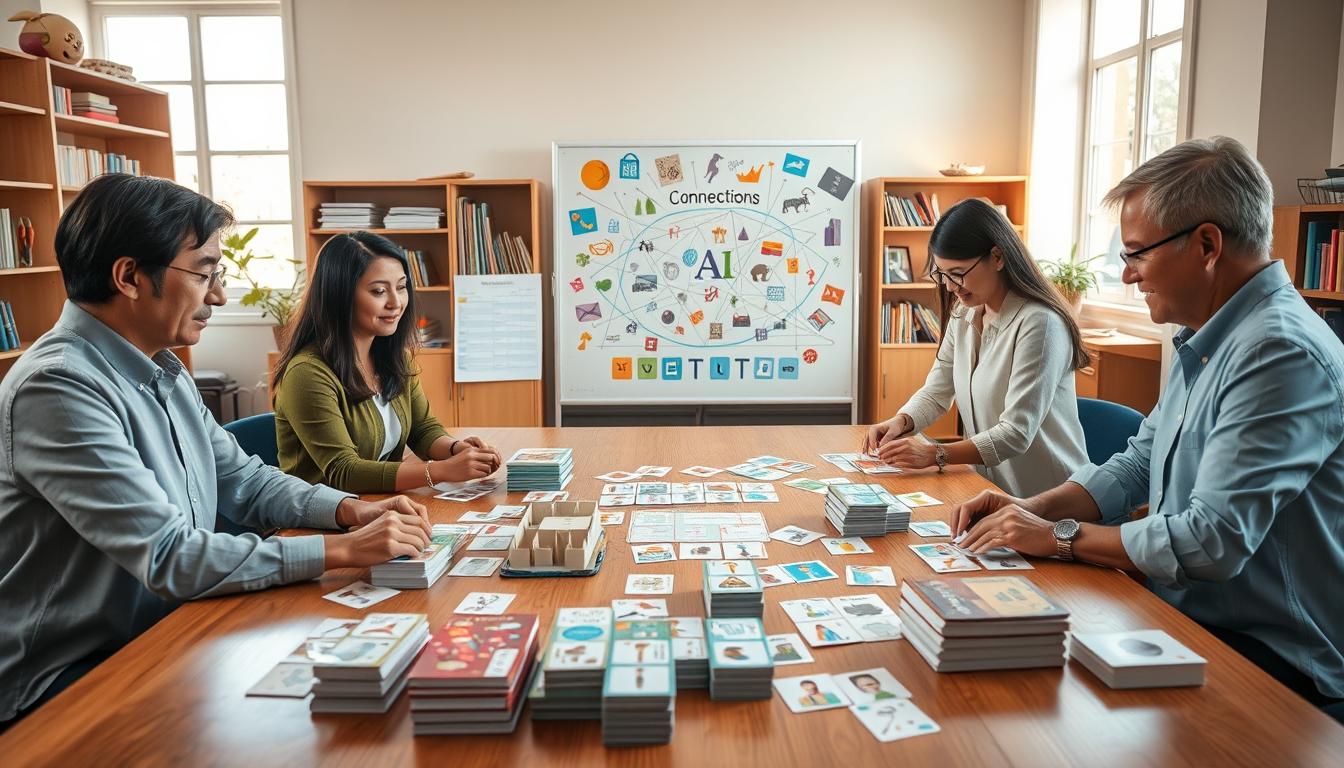
Cognitive anticipation games for adults working in highly competitive environments

Can a short, well-designed activity sharpen the judgment your team needs under pressure? This guide answers that question with practical moves you can use at work now.
Employers rate critical thinking as a top skill: 75% in an AAC&U survey asked colleges to stress real-world problem solving, communication, and creativity. That demand matters to employees who must make fast, sound choices.
We focus on portable, high-impact formats that translate into better thinking, pattern recognition, and situational awareness. Expect rapid-reaction digital titles, logic-first puzzles, strategic board play, and collaborative team activities.
Each entry shows the why, the how, and the concrete skill gains. You’ll find short rules, ways to measure outcomes, and tips to fit practice into hybrid and remote US workplaces.
Why anticipation skills matter now for competitive jobs in the United States
Data overload and rapid tech shifts mean staff must predict outcomes, not just react.
Massive data streams, fast AI adoption, volatile markets, and remote teams change how employees work. Companies that build strong analytical cultures show better decision-making, resource use, and resilience. Those that lag risk missed opportunities and avoidable errors.

From overwhelming data streams to rapid AI shifts: why reactive isn’t enough
When information arrives nonstop, teams need strategies to sort signals from noise. Critical thinking helps employees test evidence and avoid confusing correlation with causation. That reduces costly missteps and speeds time-to-decision.
How critical thinking and strategic planning improve workplace outcomes
Strategic planning aligns milestones, risk checks, and resource tradeoffs so teams coordinate faster and escalate fewer issues. Low-risk training like short games and debriefs pressure-test communication and reveal practical insights.
Leaders and individual contributors gain forward-looking methods that fit hybrid US environments and meet compliance or market pressures. The payoff: clearer meetings, better scenario planning, and stronger cross-functional alignment.
How we curated this list of thinking games and activities
We screened tools and activities that show quick, transferable improvements in team decision making.
Selection focused on three practical criteria: which cognitive abilities are trained, how fast benefits appear, and how accessible each option is across devices and formats.

Selection criteria and rationale
- Targeted abilities: spatial reasoning, pattern recognition, long-term planning, resource management, and problem-solving.
- Time-to-benefit: we favored titles that show measurable gains after one or two short sessions.
- Accessibility: digital, board, and low-cost team options that fit hybrid programs and common meeting cadences.
- Feedback and transfer: games with clear feedback loops, structured rules, and traceable skill transfer to workplace scenarios.
- Variety and replay value: we included individual exercises and collaborative exercises to cover solo focus and team communication.
- Learning design: difficulty progression and post-activity debriefs were weighted to accelerate retention and craft practical strategies.
Each recommended game offers tangible skills employees can apply right away: pattern spotting, hypothesis testing, and resource strategies backed by observed performance improvements.
cognitive anticipation games for adults in competitive jobs
Short, targeted exercises help staff model next steps and respond with precision under pressure.
Fast focus, reaction time, and pattern recognition in real work environments
Anticipation means modeling next states, spotting early signals, and acting with precision. Quick-feedback formats train that habit by forcing rapid choices and clear consequences.
Titles like Portal and The Witness develop spatial logic and hypothesis testing. Sudoku builds disciplined deduction. Chess and Wingspan push long-term planning, while Azul and Catan sharpen timing, risk, and negotiation.
These options boost the brain’s pattern spotting, working memory scaffolds, and sustained attention under pressure. Exercises scale from five-minute warm-ups to hour-long strategy sessions, so teams and individual employees can fit practice into busy calendars.
Use team rounds to build shared mental models and run short debriefs to turn moments from play into actionable lessons for meetings, stakeholder talks, and risk controls. Pick by focus—timing, memory, or planning—and by available time to get fast, measurable returns.
Rapid-reaction digital puzzles that sharpen focus and timing
Fast digital puzzles train split-second judgment that maps directly to incident triage and on-call decisions.
Timed, feedback-rich formats improve focus and timing by forcing quick choices and clear consequences. That transfer matters when employees must act under pressure and reduce error rates.
Portal series: momentum, spatial logic, and creative problem-solving
Portal uses a portal gun to solve physics-based chambers. Players learn momentum, trajectory, and spatial visualization by testing ideas rapidly.
Practical strategies: master basic physics, experiment freely, and use co-op mode to pressure-test communication under constraints. Short team sprints reveal how timing and handoffs affect outcomes.
The Witness: hypothesis testing and rule discovery under pressure
The Witness offers non-linear line puzzles with no tutorials. It trains observation, rule discovery, and disciplined hypothesis testing.
Tips: keep a notebook, explore areas non-linearly, scan environments for hidden cues, and take breaks to reset the brain. Curate puzzle sequences to match session length and capture discovered strategies as checklists.
These formats boost working memory, attention switching, and spatial skills. Run quick solves together, then debrief how collaboration and timing changed the result. That practice shortens time to insight and improves accuracy on ambiguous challenges.
Logic-first puzzles that build disciplined reasoning and memory
Short, structured puzzles create habits that reduce errors and speed clear decision trails.
Sudoku: structured deduction, working memory, and sustained attention
Sudoku trains pure deduction with stepwise techniques like pencil marks, naked singles, and hidden pairs. Use methodical passes and systematic scanning to turn guesses into verifiable answers.
Practice builds memory and sustained attention. Time-box five- to ten-minute drills as warm-ups before focused work blocks.
Baba Is You: rule manipulation for innovative solutions
Baba Is You lets players rewrite level rules (for example, “Baba Is You” or “Wall Is Stop”). That rule inversion trains abstraction and experimental thinking.
Encourage employees to test unconventional paths and document breakthroughs. Pair Sudoku with Baba Is You: one drills deduction, the other stretches flexible thinking.
- Benefits: stronger working memory, inhibition control, and pattern consolidation.
- Team adaptation: shared puzzles with a rotating narrator to verbalize logic and create repeatable strategies.
Strategic board games for long-term planning and adaptive thinking
Board strategy titles teach multi-step planning and adaptive responses that mirror real project cycles.
These table-top experiences train scenario planning, resource sequencing, and adaptive choices across changing constraints. They let teams rehearse tradeoffs without real-world risk.
Chess: foresight, scenario planning, and decision quality
Chess builds pattern recognition and multi-move forecasting. Practice tactics, study classic games, and run post-mortems to improve decision quality.
Wingspan: engine-building, resource management, and strategic tradeoffs
Wingspan rewards early engine setup and aligning plays with round goals. Focus on compounding bonuses and timing to unlock steady gains.
Azul: tactical timing, risk management, and constraint optimization
Azul teaches pick timing and denying opponents. Accept small short-term penalties when they enable larger future returns.
Settlers of Catan: negotiation, probability, and strategic positioning
Catan emphasizes diverse placement, probability awareness, and deliberate trades. Pursue development objectives while shaping the board economy.
| Title | Core skills | Workplace transfer | Quick tip |
|---|---|---|---|
| Chess | Foresight, pattern training | Scenario planning; risk sequencing | Study 10 classic games weekly |
| Wingspan | Engine-building, alignment | Resource compounding; goal alignment | Map bonuses to quarter goals |
| Azul | Timing, constraint optimization | Supply timing; tactical sacrifice | Practice denying valuable tiles |
| Catan | Negotiation, probability | Tradecraft; adaptive positioning | Place for variety of resources |
- Run short mini-leagues or asynchronous matches to build planning habits among employees.
- Hold brief debriefs that ask “why” about choices, not only outcomes, to surface usable strategies.
- Set time windows per turn and rotate roles (analyst, strategist, negotiator) so team members practice different planning muscles.
Team-building game activities that train communication skills at work
Practical team activities surface communication habits faster than lectures or slides.
Collaborative challenges speed trust, shared frames, and clearer messaging under pressure. Short, focused sessions force teams to name roles, hand off work, and manage limits.
Escape Room challenges: time management and teamwork under pressure
Form groups of 4–6 and set a 60-minute limit. Use varied puzzles and simple hint rules to mirror time-critical projects.
Debrief on role clarity, escalation paths, and how the team removed bottlenecks while keeping momentum.
Murder Mystery: evidence evaluation and collaborative deduction
Assign roles, surface clues, and have employees weigh evidence to name a perpetrator. The format trains bias checks and consensus-building.
After play, review how clues were shared, how dissent was handled, and which signals guided the final call.
Improv: rapid thinking, communication, and adaptability
Run scenario rounds with one-sentence turns that build to a workable solution. This boosts supportive listening and concise messaging.
“Shared, timed practice exposes habits you can fix quickly—before real stakes arrive.”
- Facilitator tips: set objectives, rotate leads, and capture insights in a shared doc.
- Hybrid: use virtual escape rooms or video improv to include remote employees.
- Reflection prompts: What signals helped? Who escalated? How will this change stakeholder updates?
Repeat these activities regularly to reinforce turn-taking, signal amplification, and calm under pressure—core skills that transfer directly to daily work.
Puzzle relays and exercises that encourage efficient problem-solving
Relay drills turn isolated tasks into a flow that mirrors real workplace handoffs.
Set up a sequence of logic puzzles, crosswords, and riddles. Each participant solves one item then passes the work to the next person. This relay format mirrors how insights and tasks move across roles in real projects.
Puzzle-Solving Relay: strategy handoffs and collaborative logic
Mix puzzle types and raise difficulty as the relay progresses. Assign clear roles: solver, checker, and recorder. That reduces errors and speeds transitions.
| Stage | Role | Metric | Quick tip |
|---|---|---|---|
| Start | Solver | Handoff time | Note partial reasoning |
| Middle | Checker | Error rate | Use short verification steps |
| End | Recorder | Completion time | Capture final decisions |
| Variation | Rotate leads | Restart speed | Run parallel relays |
Track handoff time and errors to measure how well the team communicates. Use debrief prompts: where did reasoning drop, which templates helped, and how did the group recover when stuck?
Short, repeatable sessions teach employees practical strategies that cut rework. Capture best-practice checklists and share them across teams to improve cross-functional throughput.
Role-playing scenarios that translate directly to workplace performance
Well-built role-play recreates policy limits, stakeholder tension, and tight timelines so teams can practice decisions before stakes rise.
Scenario-based training: stakeholder alignment and rules-based decisions
Run short sessions that mirror customer, compliance, or partner conflicts. Walmart uses role-play to improve service responses, and Lockheed Martin pairs VR modules with assembly tasks to train technicians at scale.
- Define scenario goals and the relevant rules or policies.
- Assign roles and time-box each interaction.
- Capture dialogue and key decisions for later review.
Debrief focused points: who escalated, what rules guided the call, and which strategies led to faster alignment. Rotate roles to build empathy and negotiation perspective across the team.
“Practice scenarios expose decision gaps in a safe space and turn lessons into repeatable patterns.”
Facilitator tips: keep segments short, prompt concise summaries, and protect psychological safety so employees share candid feedback. Codify successful exchanges into playbooks and refresh scenarios tied to current projects so practice stays relevant to daily work.
Reverse brainstorming to unlock innovative problem-solving
Flip a stuck problem on its head and you often spot fixes no one saw before.
Reverse brainstorming starts by asking: how could we make this problem worse? That twist forces the team to drop polite filters and surface hidden assumptions. Once the worst ideas are collected, the group systematically flips them into practical solutions.
Flip the problem: from worst-case thinking to actionable solutions
- State the problem clearly and set a short timer.
- Generate “worsening” ideas quickly and without judgment.
- Flip each negative idea into one or two potential solutions.
- Score flipped ideas by impact and practicality, then assign owners and timelines.
Facilitation cues keep momentum: insist on quantity, ban immediate critiques, and call out the scribe to rotate every round so all employees’ contributions are recorded. Use a simple 1–5 rubric: 1 = low practicality, 5 = high impact.
“Inverting the question widens the search space and surfaces insights normal sessions miss.”
| Step | Goal | Outcome |
|---|---|---|
| Worsen | Expose hidden blockers | Raw list of failure modes |
| Flip | Transform negatives into fixes | Candidate solutions with owners |
| Score | Prioritize by impact and ease | Roadmap for pilots |
Use this activity when teams stall or face repeating challenges. Run short, frequent sessions to keep thinking muscles sharp and to generate innovative solutions that improve product, process, and customer experience.
Virtual and hybrid engagement games for distributed teams
Remote sessions can do more than entertain — they rebuild rapport, sharpen rapid decision-making, and train handoffs that matter on the job.
Use remote-friendly formats such as virtual escape rooms, trivia blitz rounds, and improv sessions to train collaboration and quick thinking. Break into small groups with breakout rooms to keep pace tight and let more voices surface. Rotate hosts so different employees practice facilitation and leadership.
Practical setup and facilitation tips
Keep sessions inclusive across time zones by varying start times and keeping segments short. Add leaderboards and badges to boost engagement, but protect psychological safety by focusing debriefs on communication, not just points.
- Tailor topics to business themes so activities reinforce domain knowledge and real work.
- Provide quick-start kits: links, calendar invites, and a one-page facilitator checklist.
- Mix short sprints (15–30 minutes) with occasional longer sessions to fit workloads.
- Ensure accessibility and device parity so all employees can join easily.
Measure and iterate
Track light metrics — attendance, basic sentiment, and top themes learned — to refine future sessions. Use debrief prompts that ask: What signals improved communication? Who owned the handoff? What will we try next?
| Metric | Why it matters | Quick target |
|---|---|---|
| Attendance | Signals reach and interest | 70–90% of invited team |
| Sentiment | Measures morale and inclusion | Average ≥4/5 |
| Themes learned | Tracks actionable takeaways | 2–3 per session |
How to match games to job functions, levels, and environments
Not every activity fits every role; pick exercises that map to real daily tasks. This alignment makes practice feel useful and speeds skill transfer to work.
Map by cognitive focus: match timing drills to incident teams, deduction puzzles to analysts, and negotiation titles to client-facing leads.
High-pressure roles: fast-response thinking puzzles
Incident response, trading, and operations need time-bound digital puzzles and rapid decision drills. Use short rounds with strict timers and quick debriefs to train escalation and prioritization.
Leadership tracks: planning and negotiation
Senior staff benefit from chess, Wingspan, and Catan-style sessions that teach strategic thinking, resource tradeoffs, and stakeholder negotiation. Increase complexity and add scenario layers over time.
| Need | Recommended format | Session length | Quick pick |
|---|---|---|---|
| Fast response | Timed digital puzzles | 10–20 min | Short sprints + 5-min debrief |
| Leadership planning | Strategy board play | 45–90 min | Scenario rounds with role swaps |
| Regulated work | Rule-based role-play | 30–60 min | Document decisions; keep logs |
| Mixed teams | Paired relays | 20–40 min | Rotate roles quarterly |
Use a short intake checklist: objective, time available, team size, and required documentation. Collect decision examples during play to build an internal strategy library that employees can reference later.
Mini-programs and training plans: cadence, difficulty, and rules
A compact training loop helps teams build and keep sharp decision habits.
Run weekly sprints of 30–60 minutes with a clear objective, set rules, and a rotating focus on logic, strategy, or collaboration. Start each session with a 5–10 minute warm-up of quick logic drills, move to a main activity (relay, reverse brainstorming, or a short game), then close with a five-minute debrief that captures one or two lessons.
Weekly sprints: short sessions, clear rules, and progressive challenge
Use progressive difficulty and optional scaffolds so employees stay engaged but not stuck. Rotate roles—facilitator, recorder, strategist—so every team member practices leadership and communication.
- Integrate sessions into standups or retros to save calendar time.
- Keep shared artifacts: rule summaries, checklists, and captured strategies.
- Schedule monthly objectives (negotiation, timing, logic) and a quarterly review to track progress.
Include periodic mixed challenges to stress-test transfer between modes. For remote teams, set platform defaults, assign breakout tasks, and keep strict timing. Collect feedback each week and tweak rules and challenge levels to keep the program effective and relevant.
Measuring impact: from reaction time to decision quality
Good practice needs clear evidence. Track a few simple metrics to show whether short sessions improve how your team performs under pressure.
Practical metrics: time-to-solve, error rates, and communication insights
Start with a baseline: record time-to-solve, hint usage, and error rates before the program begins. Repeat the same measures after one month and quarterly to spot trends.
Capture qualitative notes during debriefs. Log clarity of handoffs, listening behaviors, and escalation paths. Those insights explain why time and errors changed.
| Metric | Why it matters | Easy target |
|---|---|---|
| Time-to-solve | Shows speed under pressure | 10–20% reduction in one quarter |
| Error rate | Measures accuracy and validation | Drop errors by 15% over two months |
| Communication notes | Highlights handoff quality | 2 actionable improvements per session |
- Track decision quality proxies: scenario coverage, risk identification, and alignment to strategic planning objectives.
- Log strategies employees reuse to show learning artifacts and brain/attention gains from consistent puzzles.
- Use lightweight dashboards to visualize progress and flag when challenges need recalibration.
“Measuring what matters turns short practice into long-term improvement.”
Tie metrics to role outcomes—faster incident response, fewer rework cycles, and clearer meetings. Run interval testing (monthly or quarterly) and fold insights into the next cycle to compound gains across the team.
Tips to sustain engagement and teamwork over time
Long-term engagement comes from variety, visible progress, and small wins.
Design a steady cadence that mixes formats, hosts, and settings. Rotate who leads each session so more team members own the process. Short, clear wins keep employees coming back.
Rotate challenges and settings
Switch challenge types to avoid fatigue and engage different thinking styles. Combine virtual rounds, in-office meetups, and short outdoor sessions to add novelty.
Share recognition and broaden ownership
Celebrate creative solutions and notable communication wins. Use quick shout-outs, badges, or a brief highlight reel to reward effort.
Keep momentum with micro-practice and feedback
Between sessions, offer micro-challenges that take five minutes. Collect participant feedback and evolve activities to fit workloads and interests.
| Focus | Action | Why it works |
|---|---|---|
| Rotate hosts | Assign a new facilitator each week | Builds ownership and varied facilitation styles |
| Vary environment | Virtual, office, outdoor | Maintains novelty and motivation |
| Recognition | Public praise and small rewards | Boosts morale and repeat participation |
| Micro-challenges | 5–10 minute tasks | Keeps skills warm with low time cost |
Capture and share insights across groups so lessons spread. Rotate themes like “logic focus” or “negotiation week” to set expectations and build skill layers over time. This way, team practice stays useful and sustainable.
Conclusion
Small, regular sessions build clear thinking and smoother team handoffs.
Structured play is a reliable way to strengthen planning, communication, and decision skills. Solo puzzles and team rounds each offer distinct gains—from disciplined deduction to better coordination under pressure.
Keep sessions short, repeatable, and tied to measurable targets. Debriefs convert experience into usable knowledge that employees can reuse on the job and in daily life.
Start with one or two formats that match your goals, set a simple metric, and run a weekly cadence. Measure progress quarterly and adjust selection criteria as business needs change.
Pick a first game, set a date, and begin building durable critical thinking capacity across your team.