Categorization educational games for adults struggling to maintain mental structure
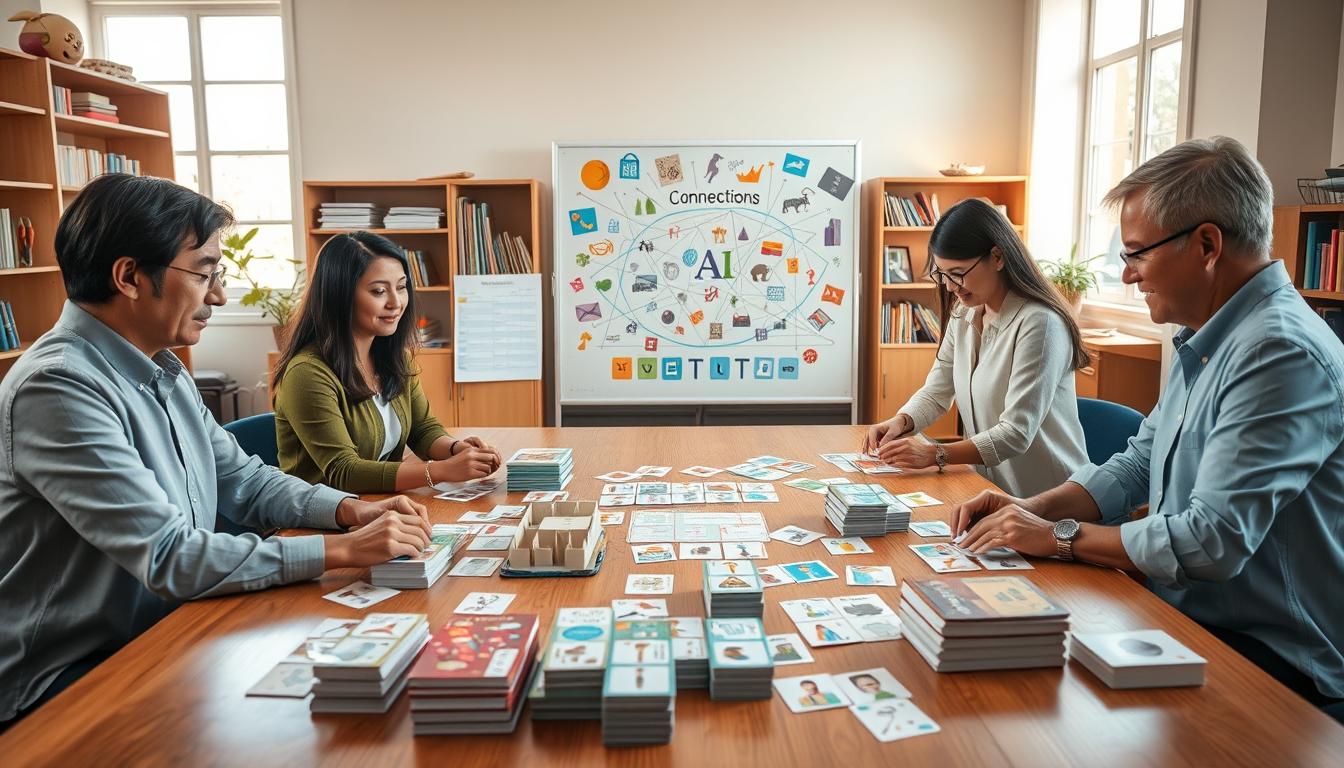
Can sorting cards and simple rule-based play really reset a cluttered mind and make daily planning easier?
Bayeck’s 2020 review of 40+ studies shows that board play can break complex topics into clear steps. That research links play mechanics to stronger working memory, flexibility, and practical skills.
This article explains why educational categorization games for adults with disorganized thinking work now. You will see the benefits, a usable approach to selection, and ideas that match real tasks like email triage or calendar grouping.
Expect short sessions, low-prep options, and group or solo formats that support planning and micro-goals. The aim is simple: build repeatable routines, boost confidence, and map game rules to daily goals.
Why categorization games help adults organize thinking in the present day
Simple sorting tasks can act like mental scaffolds that make cluttered plans feel manageable.
Research summarized by Bayeck (2020) shows board play breaks complex skills into steps and boosts working memory and flexibility.
“Board gameplay supports learning by simplifying complex skills, engaging diverse learners, and strengthening working memory and flexibility.”
Mechanics that label, group, and order items give a concrete way to move scattered notes into prioritized queues. This reduces cognitive load in an age of constant notifications and multitasking.
Frequent short sessions create low barriers and fast feedback. They train the brain to filter, sequence, and act under time pressure—skills that map to email triage and calendar sorting.
| Mode | Primary benefit | When to use |
|---|---|---|
| Solo | Privacy, quick practice | Busy schedules, short time blocks |
| Group | Accountability, reflection | Workshops, peer coaching |
| Short sessions | Reinforcement, low fatigue | Daily micro-practice |
Start by pairing one core mechanic with one EF skill each week. After play, ask: what ideas worked, what failed, and how will I apply this now?

Executive functioning benefits: planning, organization, time management, and working memory
Structured play can train planning muscles by forcing players to map moves and resources ahead.
What research and practice suggest about game-based learning
Bayeck (2020) links board play to creative thinking, teamwork, and stronger working memory. LSA guidance advises tailoring play to target EF skills, keeping sessions regular, raising difficulty slowly, and mixing player groups.
“Board gameplay supports learning by simplifying complex skills, engaging diverse learners, and strengthening working memory and flexibility.”
Translating mechanics into real-world skills
Below are practical ways to apply play mechanics to daily routines and work tasks.
- Planning improves through set-building and sequencing moves—practice mapping resource chains or clue-to-category routes.
- Organization grows from tableau layouts, discard choices, and card management that mirror file systems and task boards.
- Time management comes from turn limits, round timers, and pacing decisions that teach estimation and prioritization.
- Memory strengthens by tracking hidden info, holding rules, and juggling multi-step plans under mild pressure.
| EF Target | Relevant Mechanic | Transfer Idea |
|---|---|---|
| Planning | Set-building, sequencing | Map project steps like resource chains |
| Organization | Tableau & discard | Use layout logic for inbox folders |
| Time | Timed rounds, turn order | Convert rounds into micro-deadlines |
| Memory | Hidden info, rule tracking | Practice holding multi-step tasks mentally |

How to choose the right categorization game for adults with disorganized thinking
A good match starts by checking how much stimulus and rulework a session requires. Begin with one clear goal and pick a single mechanic that mirrors that aim.
Stimulus load, rules complexity, and playtime
Assess visuals: colors, icons, and text density. Low stimulus reduces overload.
Check rules: count exceptions, phases, and lookup needs. Start simple and add layers.
Plan time: include setup, a 15–30 minute core, and reflection. Short sessions build habit.
Solo vs group, competitive vs cooperative
Solo play lets participants self-pace and practice skills privately.
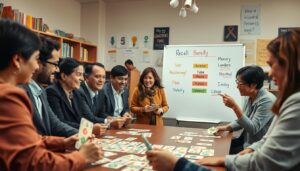
Group formats add accountability and shared problem solving. Keep groups small and assign roles like timekeeper or reader.
Competitive modes sharpen prioritization; cooperative modes train communication and joint planning.
“Customize selection to current executive needs, keep sessions regular, and debrief to link play to real tasks.”
| Need | Recommended option | Tools to use |
|---|---|---|
| Low overload | Short, low-text card sets | Player aids, reference cards |
| Skill building | Moderate rules with clear phases | Turn trackers, timers |
| Social learning | Small cooperative group | Assigned roles, debrief prompts |
Best board and card categorization games to build structure
Try a handful of well-designed board titles to map game mechanics onto real-life sorting and planning habits. Each selection trains grouping, gives fast feedback, and scales to two-player or small table sessions.
Codenames
Rules note: one-word clues link multiple targets. Benefits: trains semantic grouping and selective attention. Strategy: practice clue bundling to tag email subjects or subject lines.
Carcassonne
Rules note: tile placement forms cities, roads, and fields. Benefits: spatial categories and set completion. Strategy: mirror milestones by tracking closed sets as project checkpoints.
Azul
Rules note: draft tiles to complete rows and patterns. Benefits: color-category optimization and efficiency. Strategy: use visual reminders of scoring to reduce rule load.
Dominion
Rules note: build a deck from Action, Treasure, Victory cards. Benefits: organizing types and purchase sequencing. Strategy: player aids and simple purchase plans lower cognitive barriers.
Dixit
Rules note: image-based clues invite metaphorical matches. Benefits: associative categorization and flexible thinking. Strategy: use short debriefs to translate ideas to work tasks.
| Title | Core skill | Low-load tip |
|---|---|---|
| Codenames | Semantic grouping | Limit clues; pair players |
| Carcassonne | Spatial sets | Short rounds, small table |
| Azul | Pattern planning | Visual score aids |
| Dominion | Deck organization | Use cheat-sheets |
| Dixit | Associative reasoning | Keep prompts simple |
Strategy titles that strengthen planning and organization through categorization
Certain strategy titles train clear planning habits by forcing players to sort patterns over short intervals. These picks map directly to practical planning steps you can practice at the table.
Chess: pattern classes and phased planning
Chess teaches category recognition across opening, middlegame, and endgame patterns. Players learn to sequence moves, evaluate positions, and set short tactical goals.
Tip: Practice 20–30 minute tactical drills focused on opening development or endgame technique.
Wingspan: engine-building by resource and type
Wingspan groups bird powers, habitats, and food types. Players build engines by linking card synergies and timing activations to hit round objectives.
Tip: Run short early-engine sessions to secure card draw and stable resource flow.
Settlers of Catan: resources, probabilities, and trades
Catan highlights resource bands and dice probability. Players plan placement, assemble trade sets, and adapt to shifting board dynamics and group negotiation.
Pandemic: role-based task categories
Pandemic structures actions into treat, share knowledge, and cure tasks. Group coordination forces players to prioritize critical paths under rising pressure.
“Use small, focused sessions to practice one decision type at a time and narrate categories aloud to reduce learning friction.”
- Session pacing: 20–30 minute tactical drills (chess puzzles, Wingspan early turns).
- Lower friction: teach one concept, add player aids, and narrate choices aloud.
- Small goals: piece activity (Chess), early card draw (Wingspan), resource diversity (Catan), aligned role actions (Pandemic).
- Time practice: cap turns with gentle timers to build comfort under limits.
- Reflection: capture one planning insight and map it to a daily task or batch.
| Title | Primary focus | Quick practice idea |
|---|---|---|
| Chess | Phased pattern recognition | 10–20 puzzles on openings or endgames |
| Wingspan | Engine-building & resource timing | Early draft only runs to secure engines |
| Settlers of Catan | Resource bands & negotiation | Simulated placement drills, trade planning |
| Pandemic | Role coordination & prioritization | Scenario turns focused on one role’s tasks |
Working memory and attention: categorization games that train recall
Memory drills disguised as play help people keep track of steps, claims, and candidate sets. Short sessions that force recall reduce overload and build practical habits that transfer to notes, meeting lists, and task queues.
Hanabi: hidden information and sequence categories
Hanabi asks players to remember unseen card sequences after receiving limited clues. This strengthens recall and cooperative attention.
Tip: agree on consistent clue conventions and limit table talk. That keeps cognitive load low while preserving the memory challenge.
The Resistance: tracking statements and behavior categories
The Resistance trains players to log claims, voting patterns, and behavioral cues. It encourages quick evidence updating and hypothesis testing in a group setting.
Tip: allow brief written notes or one-line mental summaries to help players track who said what without disrupting flow.
Sudoku: constraint families and candidate sets
Sudoku builds memory for elimination steps and candidate sets. Players learn to hold partial deductions and revisit them until the grid resolves.
Concrete tips: use pencil marks, scan systematically for naked singles and hidden pairs, and set clear stopping points to avoid fatigue.
- Pairing idea: warm up solo with Sudoku, then practice cueing and sequence recall in Hanabi with a small group.
- Transfer: label meeting notes by category, keep short evidence lists, and review candidate next actions after short sessions.
- Practice rule: capture one idea per session on which memory aid worked and how to reuse it when organizing work tasks.
| Title | Primary recall focus | Quick tip |
|---|---|---|
| Hanabi | Sequence and unseen card order | Use fixed clue signals |
| The Resistance | Statement tracking and behavior patterns | Allow brief notes |
| Sudoku | Candidate sets and elimination steps | Pencil marks and scans |
Digital categorization games and apps that support structured thinking
Digital titles turn abstract rules into repeatable practice that strengthens structured problem solving.
Portal organizes spatial logic into clear rule families: momentum conservation, portal placement, and cause-effect chains. Portal 2 adds a cooperative mode that forces players to communicate sequence and categories aloud. That shared work trains concise instructions and sequencing under pressure.
The Witness scaffolds visual rule discovery. Players identify families of puzzles, infer rules, and sort solutions non-verbally. This builds an approach to novel problems where observation drives classification and next steps.
“Short digital sessions let you practice one concept at a time and see steady progress.”
Practical tips:
- Daily 10–15 minute drills: pick one concept (e.g., symmetry) and reflect briefly.
- Use in-game journals or note apps as tools to tag ideas and concepts for later review.
- Run co-op Portal 2 sessions to practice clear category language and sequencing.
| Title | Focus | Quick use |
|---|---|---|
| Portal / Portal 2 | Spatial logic, cause-effect | Co-op runs for communication drills |
| The Witness | Rule families, visual discovery | Short puzzles focused on one concept |
| Mobile drills | Sorting, set recognition | 10–15 minute sessions, tag notes |
Digital practice complements tabletop play and gives a steady resource when group sessions take more time. For more background and curated resources see our resource hub.
Brainstorming-based categorization activities for teams
A short, structured brainstorm can move a team from fuzzy concepts to actionable lists. Use clear phases: warm-up, expansion, sorting, and shortlisting. This keeps participants focused and preserves momentum after the session.
Mind Mapping & Lotus Blossom
Mind Mapping builds visual trees that make categories and subcategories obvious. Participants can color-code branches and mark thickness to show priority.
Lotus Blossom starts from a core theme and expands to eight themes, then blooms each into more ideas. It creates a structured map that helps teams group and compare options quickly.
Role and silent contribution methods
Six Thinking Hats assigns thinking roles (facts, risks, creativity, etc.) so a team explores balanced viewpoints and reaches aligned goals.
Brainwriting and Round Robin use silent, sequential idea capture on cards. These techniques reduce dominance, raise variety, and let quiet participants contribute equally.
Station rotation and SWOT sorting
Walking Brainstorm places topics at stations; groups rotate and add notes. This lowers groupthink and gives time for reflection.
SWOT sorts ideas into strengths, weaknesses, opportunities, and threats. It surfaces priorities and risks for easy shortlisting.
Timing, tools, and next steps
- Structure a session: 5–10 minute warm-up, 15–25 minute expansion, 10–15 minute categorization, 10 minute shortlist and owner assignment.
- Use simple tools: sticky notes, online whiteboards, pre-built templates, and timers to speed set-up and support remote participants.
- Translate outputs: label categories, assign owners, and set one measurable goal per category so ideas convert into action.
| Activity | Primary benefit | Quick timing |
|---|---|---|
| Mind Mapping | Visual structure | 15–20 min |
| Lotus Blossom | Deep expansion | 20–30 min |
| Brainwriting | Equal input | 10–15 min |
Educational categorization games for adults with disorganized thinking
Low-barrier sorting exercises fit therapy and coaching by focusing on one clear decision at a time.
Low-prep, high-clarity picks for therapy, coaching, and workshops
Pick approachable titles that teach grouping without heavy rules. Codenames trains semantic grouping. Carcassonne teaches spatial sets and can run with shorter turns. Azul practices color categories and quick pattern planning.
These three staples work well in small group settings. They onboard quickly and give instant feedback that helps transfer skills to daily tasks.
Adapting rules and tools for accessibility and comfort
Use simple adaptations: shorten play time, reduce category types, or let players keep open hands while learning. Provide reference sheets, category cue cards, and a turn tracker to keep attention anchored.
Facilitate mini-demos, guided turns, and a two-minute debrief that captures two or three actionable ideas. Offer printable prompts and simplified score aids so group members stay focused during tight time windows.
| Need | Recommended pick | Adaptation | Session time |
|---|---|---|---|
| Clear icons & low text | Codenames | Limit clue scope; pair players | 30 min |
| Spatial mapping | Carcassonne | Shorten rounds; reduce tile types | 30–45 min |
| Visual pattern practice | Azul | Fewer color lanes; visual aids | 20–30 min |
| Tracking & reflection | Any staple | Use behavior logs & reference sheets | 5–10 min debrief |
Regular, repeated exposure helps skills stick. Encourage groups to pick one title and run it weekly to consolidate planning and organization habits.
Low-stimulation, short-session categorization games for busy schedules
Pocket-friendly rounds can deliver meaningful practice in under 20 minutes. These low-stimulus options keep setup light and focus on one clear skill per run.
Quick setups, small table, minimal components
Curate quick options with minimal setup and clear rules such as Codenames: Duet, Point Salad, and Sushi Go! These titles run in about 15–20 minutes and teach rapid grouping strategies.
Simple formats and timing templates
- Prioritize small table footprints and portable boxes so adults can play in break rooms or at a desk.
- Offer rule-light variants that isolate one mechanic—run sessions that focus on a single scoring idea to lower load.
- Mix formats: card drafts, micro boards, and tile rounds give a useful variety without long explanations.
| Step | Minutes | Purpose |
|---|---|---|
| Setup | 2 | Minimal pieces, quick rule read |
| Play | 12–15 | Focused practice |
| Reflection | 5 | Capture one idea and next action |
Practical tips and habit ideas
Rotate roles (scorekeeper, rule reader) so participants share effort and stay engaged. Keep phones away and pick a quiet spot to reduce distractions.
Build consistency by habit stacking: play a short round during morning coffee and mark a checkbox on a calendar to track sessions. Keep a pocket-size resource list of compact titles and printable microgames so practice is always at hand.
How to run a focused categorization session from start to finish
Start sessions by naming one practical goal and a visible success measure so the group knows what to practice and why.
Goal-setting, rules explanation, and modeling examples
State one clear goal (example: “Practice grouping by color before number”). Tell participants how you will observe success.
Explain rules slowly and show one live example of a correct category. Ask a participant to restate a key rule to confirm understanding.
Timing, turn structure, and cueing attention shifts
Define turn length, total play time, and built-in pauses. Use a visible turn order tracker and a single “thinking token” to scaffold focus.
Keep sessions short to avoid fatigue and preserve planning clarity.
Reflection prompts to link categories to life and work
Run a quick Round Robin to collect ideas that worked. Use prompts like “What did you sort first, and why?”
Close with a micro planning step: pick one real task to apply the chosen method and log that idea as a checkpoint for the next session.
Tools, cards, and resources to support practice and progression
Practical kits and simple trackers turn brief practice into measurable progress.
Start with a small set of printable prompts, compact card reference sheets, and session templates. These tools make setup fast and keep the group focused on one mechanic at a time.
Printable prompts, category decks, and session templates
Use ready-made prompts that isolate a single sorting dimension—color, number, or function—so micro-drills repeat the same skill quickly.
Include laminated cue cards, a one-page rules sheet, and a 15–30 minute session template with a timer cue. These small aids reduce cognitive load and speed transitions.
Tracking sheets and behavior logs to capture gains
Track planning steps, time use, and organization checkpoints with a behavior log. LSA-style research supports logging progress; a free PDF worksheet from The Real-Life Executive Functioning Workbook fits this approach.
- Record one insight after play and one application attempt for daily learning.
- Log recall accuracy, steps sequenced, and category consistency to map gains to EF targets.
- Keep a weekly summary of what skills improved and which ideas transferred well.
Store resources in a dedicated kit: laminated sheets, a small timer, and a packet of category decks. Run a monthly review of collected data to tune game selection and adjust difficulty.
| Tool | Purpose | Quick use |
|---|---|---|
| Printable prompts | Isolate one sorting rule | 5–10 min micro-drill |
| Behavior log | Capture steps & time | Record post-session |
| Session template | Keep sessions on schedule | Setup, play, 5-min reflection |
“Update logs immediately after play while details are fresh.”
Measuring progress: simple rules and data for real-world transfer
Simple data points help you see which decisions at the table map to real work wins. LSA guidance stresses tracking progress over time with behavior logs and notes, and Bayeck (2020) supports structured learning from board gameplay.
Observation targets
Focus on three visible targets: planning steps, organization checkpoints, and time use. Count planning steps a player states before a turn. Mark completed checkpoints during scoring. Record estimated versus actual time for key moves.
Practical techniques and rules
- Define a simple checklist and a 1–2 minute timer as your primary tools.
- Assign one person in the group to tally core points silently while others play.
- Set measurable goals such as “reduce rule lookups by one per session.”
| Measure | How to track | Quick target |
|---|---|---|
| Planning steps | Count pre-turn statements | +1 clear step |
| Organization | Checkpoints met | Increase consistent category use |
| Time use | Estimate vs actual | Reduce setup time by 10% |
Compare baseline and follow-up sessions to spot gains in recall accuracy, setup speed, and decision confidence. Capture one numeric metric and one qualitative note at the end of each play period. Over weeks, summarize monthly data to guide which strategies or techniques to keep, adapt, or retire.
“Small, consistent measurements compound into clear, transferable skills.”
Safety, ethics, and inclusive facilitation for adult groups
Inclusive facilitation balances voice, pace, and choice so participants can engage at their own speed.
Set clear rules for psychological safety: no judgment of ideas, permission to pass, and respectful listening. These ground rules help groups and quieter members feel safe.
- Provide content warnings and opt-outs; pick activities with neutral imagery and simple decisions for adults who may feel overloaded.
- Keep sessions time-bounded and include short breaks; watch for fatigue and offer quieter alternatives.
- Use Brainwriting and Round Robin so every participant has an equal voice and more vocal team members do not dominate.
- Offer resources in printed, visual, and digital formats; make accommodations explicit (larger fonts, colorblind palettes, simple icons).
Encourage a team culture that values small gains and varied paces of learning. Invite feedback after sessions about comfort, pacing, and clarity and adjust facilitation based on what participants report.
| Focus | Practice | Why it matters |
|---|---|---|
| Safety | Clear rules, pass option | Protects psychological comfort |
| Access | Multiple formats, font & color aid | Supports different processing styles |
| Ethics | Anonymize logs, secure notes | Respects privacy and data |
Remember: facilitation should support growth in structured thinking, not rank people. Keep a strengths-based stance and celebrate practical ideas as they appear.
Conclusion
A single, focused round can reveal small strategy shifts that compound into clearer routines.
Use short practice to capture the core benefits: clearer planning, stronger skills, and more reliable daily work habits. LSA-style reflection and Bayeck (2020) back the idea that structured play boosts creative thinking and practical transfer.
Set one or two goals for the week. Choose one title, schedule a 20-minute session, and keep a brief log to record ideas and outcomes. Align the mechanics to the skill you want to train and reflect after play to turn insights into action.
Form a small group or find an accountability partner to sustain momentum. Start small, repeat often, and revisit the tools section to refine your approach. Pick one title, run a short session, and capture one practical takeaway to apply today.