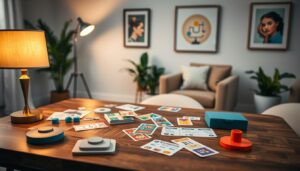
Abstract-thinking games created for adults facing creative burnout to restore mental flow

Can a five-minute break change how your mind solves a hard problem at work or in life?
Periodic stress mixes body and brain signals, and small, low-friction play can break rumination. Simple, short activities act like quick catalysts: they add pattern, novelty, and playful limits that nudge thinking toward curiosity.
This short list focuses on low-barrier options you can use in tight time windows. Expect micro-sessions and deeper twenty-minute resets that train core skills—divergent thinking, flexible planning, attention shifting, and metaphor-making—without gear or long learning curves.
Use these tools as complements to sleep, hydration, and basic wellbeing. Routine micro-doses of pattern play can reduce stress and strengthen mental health while you build durable skills over weeks.
Next, we’ll show when to use each mini-ritual, what it trains, and how to scale difficulty so progress stays motivating, not stressful.
Why abstract-thinking games help during creative burnout
Small, low-pressure activities often open new mental paths when work feels heavy.
The main benefit is how these tasks reroute attention. They tap association networks in the brain and break cycles of rumination. That shift lowers negative appraisal and gives space for fresh ideas.
They train useful skills too. Regular short play builds mental flexibility, scenario branching, and pattern recognition. Those skills transfer back to art, planning, and problem solving.
- Use five-minute resets to drop cognitive load and regain momentum.
- Pair light play with paced breathing, brief meditation, or small movements to amplify calming effects.
- Choose solitary, social, analog, digital, or green-time options based on what feels restorative today.

| Technique | Primary effect | Best when you have |
|---|---|---|
| Paced breathing | Reduces physiological arousal | 1–5 minutes |
| Low-stakes play | Restores exploration mode | Short breaks, repeatable |
| Nature or VR vignette | Mood lift and stress drop | 10+ minutes if available |
Fun matters: enjoyable prompts are repeated more often, which makes stress relief and skill gains more consistent across life and work.
Understanding stress, challenge, and mental flow in the present moment
When you feel pressure, a quick check of body and mind guides the best micro-reset.

Threat stress feels like overwhelm and harm. Heart rate rises, digestion pauses, and the brain shifts to threat readiness. Challenge stress brings apprehension plus motivation; it can boost focus when framed as a task to meet.
Threat stress vs. challenge stress: turning pressure into productive play
Recognize the difference so you can reframe pressure as motivation. A simple shift in interpretation often moves you from stuck to curious.
Breathers and restorers: choosing the right game for your current state
Breathers are short, emotion-focused activities that lower arousal. Restorers are longer, skill-building tasks that rebuild capacity.
| Signal | Best short activity | Why it helps |
|---|---|---|
| Jittery body, looping mind | Cloud spotting or sensory breathing | Lowers heart rate and shifts attention |
| Steady energy, low focus | Constraint writing or chess scenario | Engages planning and pattern skills |
| Mild fatigue but curious | Match puzzles or constellation spotting | Restores exploration without pressure |
Practical techniques: pair a 60–120 second breath cue with a one-minute micro-game to regain control. Then try a five-minute restorer if energy feels stable.
Oscillating between recovery and challenge trains flow pathways. Adults who check in moment-to-moment pick the right difficulty and keep progress motivating, not threatening.
How to use this listicle for fast relief and lasting mental agility
Pick an entry here based on how much time you have and the kind of mental shift you need.
Navigate by time: grab a five-minute activity when you need quick relief. Choose a 15–30 minute option to train sustained focus and deeper skills.
Use the list three easy ways: as an immediate stress interrupter, as a warmup before demanding tasks, or as a cool-down to preserve creative energy.
Ask simple guiding questions to help self-select: Do I need calm, ideas, or focus right now? Solo or social energy? Analog or digital?
Pair short, deliberate breathing with low-stakes games; studies show this combo reduces stress and improves regulation (Varvogli & Darviri, 2011; Russoniello et al., 2009).
Practical routine: schedule two brief play blocks per day. Combine one calming activity and one stimulating game to balance regulation and activation.
Adopt a light training mindset: favor consistency over intensity so gains in focus and stress tolerance build over weeks. Bookmark this living list and log quick notes on what worked to create your go-to protocol.
Abstract-thinking micro-games you can play in five minutes
Short, deliberate micro-sessions can reset attention and spark new connections fast. These five-minute exercises prime the brain to loosen rigid loops and invite quick insight before you return to work.
Free association chains and mind maps
Start with one word and build a branching map for five minutes. This free association chain promotes fluid thinking and primes idea generation.
Opposite-hand doodling and blind contour sketches
Draw with your non-dominant hand or without looking at the page. These quick sketches lower perfectionism and open new visual pathways.
Cloud and constellation pattern-making
Scan the sky or a textured ceiling and name shapes fast. This playful activity improves pattern recognition and playful imagery.
Card matching sprints for focus resets
Flip and match pairs for two-minute rounds. Card matching is a simple cognitive exercise that sharpens attention and refreshes working memory. Casual digital variants are low-stakes and help reduce stress (Russoniello et al., 2009).
- Add a micro writing twist: after a map, write one surprising sentence that links two distant nodes to cross-train metaphor skills.
- Use a timer to keep each game brisk; the countdown limits rumination and protects your schedule.
- Track which activities settle nerves or boost focus, and rotate them daily to keep novelty high while training core skills.
Improv-inspired social games to spark divergent thinking
A short, playful improv round can reset how a team listens and invents together.
Improv trains quick acceptance, shared momentum, and better communication. Team-based activities may boost mental wellbeing more than solo drills (Pluhar et al., 2019). Use brief formats to keep energy light.
Yes-And circles and one-word story builds
Run a Yes‑And circle: each person adds a phrase without negating the prior idea. This practices cooperative communication under playful pressure.
One-word stories rotate around the group, one word per person. It trains timing, listening, and collective narrative skills for people who work in teams.
Character switch-ups: accents, emotions, and constraints
Have participants say a plain line in different accents or moods. This expands expressive range and flexible thinking in the brain.
Group formats vs. solo prompts for shy starters
Convert group play into solo activities by recording voice memos or texting a friend a line to continue asynchronously. This eases social load but keeps the training effect.
“Improv cultivates listening and spontaneity—core communication skills that transfer to meetings and pitches.”
| Format | Main benefit | Best for |
|---|---|---|
| Yes‑And circle | Cooperative communication | Small groups, team warmups |
| One-word story | Timing and listening | Groups of friends or colleagues |
| Solo switch-up prompts | Expressive practice, low pressure | Shy starters or asynchronous training |
Visual-spatial puzzles for reframing problems
Visual puzzles offer a quick way to shift perspective. They engage the brain through shape, color, and edge cues. That gentle shift reduces stress and primes new thinking.
Jigsaw bursts: edge-first vs. color-cluster strategies
Try five-minute jigsaw bursts. Start by finding edges, then switch to grouping by color. Alternating strategy trains selective attention and cognitive flexibility.
Tangram silhouettes and origami constraints
Recreate outlines with limited tangram pieces to strengthen spatial reasoning. Fold simple origami under one rule (no scissors) to build patience and precision. These tactile techniques train fine-grained problem-solving skills.
Digital pattern games: Two Dots, Threes!, 2048
Low-stakes digital titles like Two Dots, Threes!, and 2048 give pattern practice that refreshes focus. Short rounds calm the mind and rebuild attention without heavy commitment.
- Alternate strategies mid-puzzle to practice reframing.
- Keep puzzles on your desk for quick micro-sessions that ease stress.
- Log which activities restore clarity so you can select them before a hard task.
| Technique | Main benefit | Best when you have |
|---|---|---|
| Edge-first jigsaw | Structure recognition | 5–10 minutes |
| Color-cluster jigsaw | Selective attention | 5–10 minutes |
| Tangram/origami | Spatial reasoning and patience | 10–20 minutes |
| Digital pattern game | Low-pressure pattern training | 2–15 minutes |
Strategic classics that train flexible planning
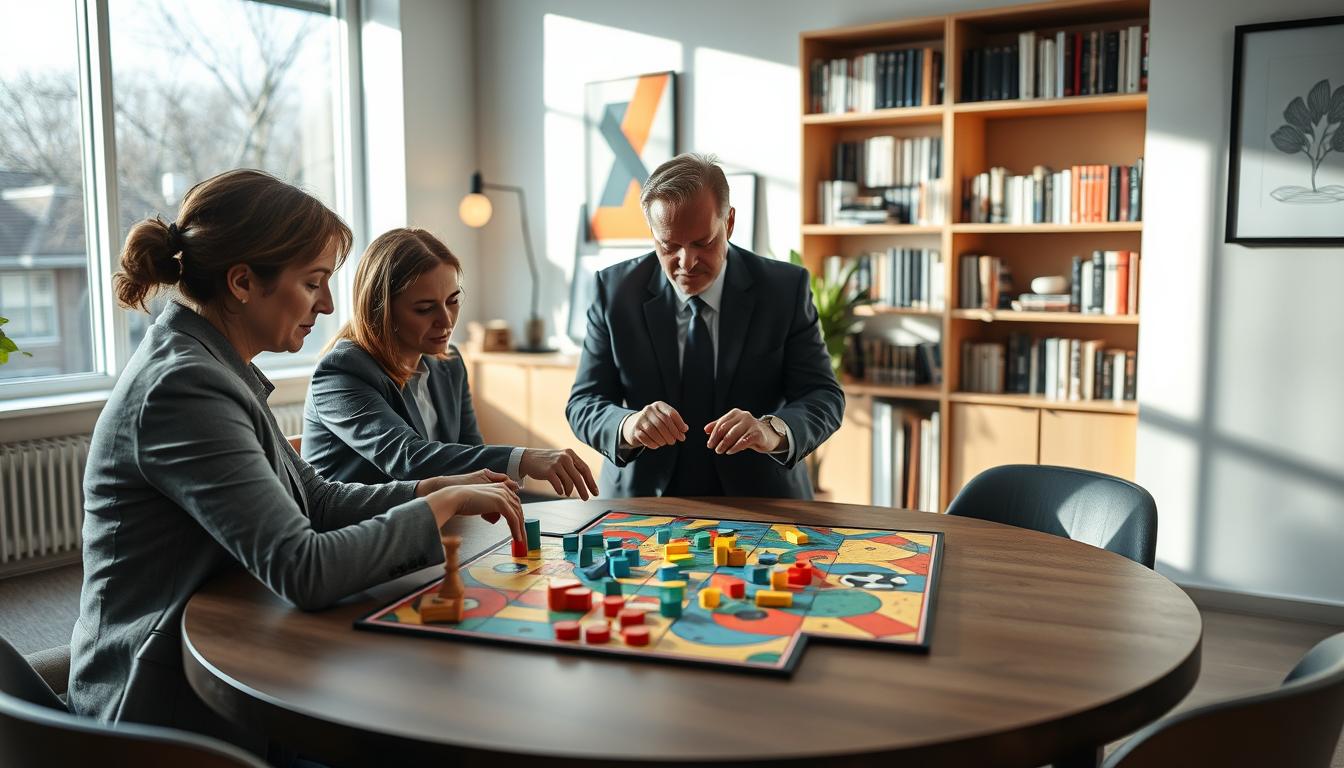
Classic board play trains planning, adaptive response, and steady decision-making in brief sessions.
Chess: scenario branching and delayed gratification
Ten-minute chess drills focus the brain on motifs like forks, pins, and simple endgames.
These short exercises teach scenario branching and reward delayed moves over instant capture. Use a timer and one theme per round.
Backgammon: risk, probability, and tempo
Speed backgammon rounds train quick probability judgments and tempo control.
Playing short matches under clock builds tactical risk assessment and sharpens attention to shifting stakes.
“Treat each session as focused practice: learning per minute beats any single long win.”
- Alternate attack and defense goals to build flexible planning skills.
- Rotate these classics with digital puzzles to vary training and keep thinking nimble.
- Note one actionable insight after each game—apply it to current projects.
| Classic | Main training focus | Best short session |
|---|---|---|
| Chess | Scenario branching, delayed reward | 10 minutes—single motif |
| Backgammon | Probability, tempo control | 5–15 minute speed matches |
| Hybrid routine | Attention switching, strategic skills | Alternate daily |
Language and word-play that unlocks lateral ideas
A short language sprint can flip how you name problems and open new solution paths. These exercises train verbal agility and reduce self-editing so fresh ideas surface fast.
Crosswords, riddles, and metaphor mashups
Riddles and crosswords boost vocabulary, memory, and solution-oriented thinking. Try a five-minute puzzle set to prime associative networks and nudge the mind toward lateral connections.
Create metaphor mashups by pairing two unrelated nouns and forcing an analogy. This reframes problems in vivid language and strengthens transferable communication skills.
Automatic writing timers and constraint poetry
Set a 2–5 minute timer and write without stopping. Automatic writing bypasses the inner critic and reveals surprising lines you can use later.
Try constraint poems, like a lipogram that avoids one letter. Limits channel focus and sharpen creative skills in short bursts.
- Do a five-minute crossword or riddle set to prime associative networks.
- Combine two strange nouns into one metaphor to reframe a problem quickly.
- Use 2–5 minute automatic writing to surface raw ideas for headlines or characters.
- Rotate constraint prompts daily to build expressive flexibility and training momentum.
- Capture standout lines in a swipe file—those fragments often become usable assets.
“Make these activities routine: small, fun sessions accumulate into real skill gains.”
Number and logic games to calm noise and sharpen attention
A few focused number rounds can steady attention and quiet the background noise in your head.
Short logic exercises train working memory and concentration. They also reduce mental clutter and improve task-switching. Use them as quick warmups before a meeting or deep work session.
Sudoku and Kakuro for working memory
Three-minute Sudoku warmups stabilize attention and silence intrusive thoughts. Quick Kakuro rounds force you to hold sums while scanning constraints. Both strengthen the brain circuits that support focus.
Set, KenKen, and quick arithmetic patterns
Play fast rounds of Set to boost rapid pattern detection and visual discrimination. Small-grid KenKen and mental arithmetic sharpen logical elimination and numeric reasoning. Alternate visual and numeric drills to cover multiple skills.
- Run a three-minute easy Sudoku to calm noisy thinking.
- Solve one Kakuro puzzle to practice holding sums in working memory.
- Play a fast Set round for pattern extraction under mild time pressure.
- Try a small KenKen to train arithmetic reasoning and elimination techniques.
- Keep difficulty low to avoid frustration; raise challenge when sessions feel brisk.
| Technique | Main benefit | Best when you have |
|---|---|---|
| Sudoku | Working memory, steady attention | 3–10 minutes |
| Kakuro | Sum holding, constraint scanning | 5–15 minutes |
| Set | Pattern detection, visual speed | 2–7 minutes |
| KenKen | Arithmetic logic, elimination | 5–12 minutes |
Use these techniques when stress feels noisy; structured logic restores order and readies your mind for complex tasks.
Nature-infused abstract games to reset the nervous system
Notice the small patterns in a park and watch stress levels soften almost immediately. Interaction with plants and green spaces reduces psychological and physiological stress by calming autonomic activity (Lee et al., 2015).
Green-time scavenger patterns: shapes, textures, symmetries
Try a short scavenger hunt that asks you to find a spiral, a symmetry, a rough texture, a repeating angle, and a contrasting color. This simple set of activities trains your eye and calms arousal.
Quick tip: pair a two-minute scan with a small water break to boost hydration and interoceptive calm.
Garden design mini-challenges with found objects
Build tiny compositions from leaves, stones, and twigs. These mini projects teach composition, negative space, and constraint-based skills. Keep it playful and low-pressure.
- Walk and pattern-spot with friends to deepen the health benefits of gentle social contact.
- Observe breath and shoulder tension before and after a two-minute nature task to notice body shifts.
- Capture one photo of a found pattern to build a texture library for later projects.
“Simple outdoor engagement signals safety to the brain and helps lower stress.”
Move to think: body-based abstract-thinking drills
Embodied drills use simple movement to tune timing, focus, and creative attention quickly. Short, low-intensity movement reduces stress and releases endorphins, helping the brain reset (Takeda et al., 2015).
Martial footwork and mirrored sequences
Drill martial footwork boxes or triangles for two minutes to train spatial planning through the body. Keep steps small and deliberate to practice timing and balance.
Mirror a partner’s slow gestures to sharpen attention and nonverbal coordination. Mirroring builds empathy and steady focus in playful practice.
Dance prompts: rule-based shape-shifting
Use short dance cues like “become a circle” or “move on diagonals” to force inventive patterning. Treat each prompt as a mini game with clear rules to measure progress.
- Keep intensity low; aim for regulation, not a fitness PR.
- Invite people for a five-minute movement break to raise morale and shared rhythm.
- End with a calming stance and three steady breaths to lock in gains.
“Movement often clears the mind; many report sharper ideas after embodied patterning.”
Breath, imagery, and mindfulness games that restore flow
Pairing paced breath with quick imagery restores mental control and primes idea flow.
Start with a short breath ladder to steady attention. Try box‑breath ladders: inhale-hold-exhale-hold in 4-4-4-4, climb to 5s, then return. Breathing near five breaths per minute lowers perceived stress and calms the nervous system.
Box-breath ladders and visual pacing
Use visual cues like pixel dots or finger taps to pace inhalation without counting. This reduces cognitive load and improves control over rhythm.
Guided imagery “mental theaters”
Write a short scene (lighting, texture, sound) and recombine elements. Swap one sensory detail at a time to rehearse novel pairings. This quick writing exercise soothes stress while warming the brain for idea work.
Progressive muscle reset
Do a rapid progressive muscle relaxation from feet to face, tensing and releasing each group. After one pass, transition to a two-minute micro practice to sharpen attention.
| Technique | Duration | Benefit |
|---|---|---|
| Box-breath ladder | 2–5 minutes | Stabilizes attention, lowers stress |
| Visual-paced breathing | 2–3 minutes | Improves breath control without counting |
| Mental theater writing | 3–5 minutes | Primes creativity and soothes the mind |
| Progressive muscle relaxation | 3–5 minutes | Reduces arousal in body and brain |
Practice tip: Keep sessions brief (2–5 minutes) and use a timer for light training. When stress spikes, lead with breath, then add a micro activity. Reflect on self signals afterward to refine what restores your flow fastest.
“Short, repeatable rituals build durable mind‑body skills that return under pressure.”
Digital and VR experiences that soothe while stimulating
Short, screen-based rituals can calm the body and prime the brain for fresh thinking. Low-stakes digital play reduces tension when pressure rises and helps reset attention in a little time.
Low-stakes casual titles to decompress
Pick easy mobile titles like Two Dots or Paperama for 3–7 minute rounds. These casual games reward pattern spotting without performance pressure. Use an app timer so play stays restorative and does not eat work time.
Immersive nature scenes to improve mood and focus
VR forests and 360° beach walks lower stress markers and lift mood. The environment soothes the nervous system while subtle sensory cues prime attention networks in the brain. Combine a two-minute paced breath before or after a session to amplify benefits.
- Prefer minimal notifications and soft soundscapes to protect recovery.
- Avoid competitive ladders if they raise arousal; keep play exploratory and fun.
- Rotate digital and analog ways to prevent habituation and support training of regulation.
| Option | Main benefit | Best session time |
|---|---|---|
| Solitaire-style & match-three | Low effort relaxation | 3–7 minutes |
| VR nature vignette | Mood lift, reduced stress | 5–15 minutes |
| Guided breath + short play | Combined brain calm and focus | 5–10 minutes |
Team play vs. solo play: picking the right mode for your brain today
Your nervous system often signals whether you need company or quiet to reset.
Group formats can lower depression and anxiety risk; studies show team activities help mental health by creating social buffers (Pluhar et al., 2019).
If motivation is low, recruit friends or a small group to jumpstart energy. If you feel overstimulated, pick a calming solo activity to down-regulate arousal.
- Use a quick decision check: tired + low drive → group; jittery + overloaded → solo.
- Short, friendly competition can energize without threat when time is limited and stakes stay playful (Roy & Ferguson, 2016).
- Try 5–10 minute call-and-response drills to boost communication and shared attention without draining people.
- Do honest check-ins: ask how each person’s nervous system feels and choose the mode that supports them.
Practice tip: Run brief team training blocks, then pivot to one-person focus work. Reflect on the difference you feel after each mode to refine your default choices.
“Cooperative formats give social support; short solo sessions sharpen private focus.”
Abstract-thinking games for adults with creative burnout
A compact menu of low-pressure tasks helps you recover focus and curiosity in minutes.
Quick picks by time: 5, 15, 30 minutes
Pick a short option to interrupt rumination or a longer block to rebuild skills.
- 5 minutes: free association chain or a fast Set round to wake pattern finding.
- 15 minutes: tangrams or a backgammon speed match to practice planning and attention.
- 30 minutes: chess motif study or a nature scavenger plus journaling session for deeper training.
Pick-by-goal: calm, idea generation, focus training
Match the activity to your aim and pair it with a clear goal to boost adherence.
- Calm: paced breathing + Two Dots for gentle regulation.
- Idea generation: metaphor mashups and automatic writing to widen association skills.
- Focus training: quick Sudoku then a timed work sprint to sharpen concentration.
Slot one small activity per morning, midday, and evening to spread benefits across the day.
- Light challenge toggle: raise a rule or shorten time when sessions feel easy.
- Watch attention markers: ease of re-entry and fewer task switches signal progress.
- After each session, write a two-line log to cement learning and track trends.
- If collaborating later, try a short communication skills prompt to warm team listening.
Turn play into a daily ritual: a seven-day restoration plan
Build a simple weekly ritual that turns tiny play habits into steady mental recovery. Short daily sequences of breathers and restorers reduce stress while training the brain to shift modes.
Day-by-day themes mixing breathers and restorers
Keep each day short—10–20 minutes total—so the plan fits into busy lives and work schedules. Alternate calming breath work and active exercises to avoid overload and to grow stamina.
Simple tracking to notice cognitive and mood gains
Pair each session with a cup of water and one reflective prompt. Ask two quick questions: How calm do I feel after? How easily do I start the next task? These notes make progress visible and aid habit formation.
| Day | Focus | Time | Water + prompt |
|---|---|---|---|
| Monday | Breathing + Set | 15 min | Drink & “What eased me?” |
| Tuesday | Improv micro + metaphor | 15 min | Drink & “What surprised me?” |
| Wednesday | Jigsaw + walk pattern hunt | 20 min | Drink & “What felt clearer?” |
| Thursday | Number logic + short breath | 10 min | Drink & “How calm am I?” |
| Friday | Movement drill + mirror | 15 min | Drink & “What shifted in my body?” |
| Saturday | Nature patterns + journaling | 20 min | Drink & “What brightened my mood?” |
| Sunday | Community play & review | 15 min | Drink & “One brain clarity moment” |
Use gentle control levers: reduce constraints on low-energy days and increase challenge when training feels easy. Celebrate small wins and note one clear insight each day to keep yourself motivated.
Consistency over intensity helps adults lock in calm, better focus, and gradual resilience.
Nutrition, hydration, and sleep: foundations that amplify game benefits
Foundational care—what you eat, drink, and how you sleep—multiplies returns from brief practice. When the basics are steady, short training sessions land more easily and last longer in daily lives.
Omega-3s, water habits, and gentle sleep hygiene
Simple upgrades in diet boost brain function and mood. Add more colorful plants and fatty fish or flax to lower inflammation and support mental health.
Build effortless water habits. Pre-fill a bottle and pair sips with each micro-session so hydration becomes automatic. Regular water intake helps mood, focus, and the body’s ability to handle stress.
Protect sleep with gentle routines: dim lights, reduce screens, and keep a short wind-down ritual. Consistent sleep consolidates learning from training and improves attention the next day.
- Take short daylight breaks; sunlight supports circadian rhythms and reduces stress reactivity.
- Add gentle exercise on heavy mental-load days to move energy through the body and ease tension.
- If meditation fits, try a three-minute breathing practice before bed to cue parasympathetic recovery.
Practical rule: tiny repeatable steps beat perfect plans. These foundational moves amplify the benefits of short sessions, improving energy, resilience, and overall health in everyday lives.
“Small, consistent care for diet, water, and sleep gives your brain the best chance to learn from quick training.”
Conclusion
A short, steady ritual of playful practice can quietly rebuild focus and ease stress over weeks. Pick one simple game and one breath practice to try today; tiny starts compound into meaningful skills that last.
These low-stakes tools help the brain at work and at home. They improve focus, flexible planning, and calm re-entry after setbacks. Choose the way that suits your energy and iterate as you learn what helps.
Invite others now and then: shared play boosts motivation and social health. Protect a little time each day—this is not indulgent but strategic care for the self and for better thinking in life and work.
Creative flow returns when the mind feels safe, curious, and supported by simple habits you can keep.